The Lace Makers
Bruges, September 2024
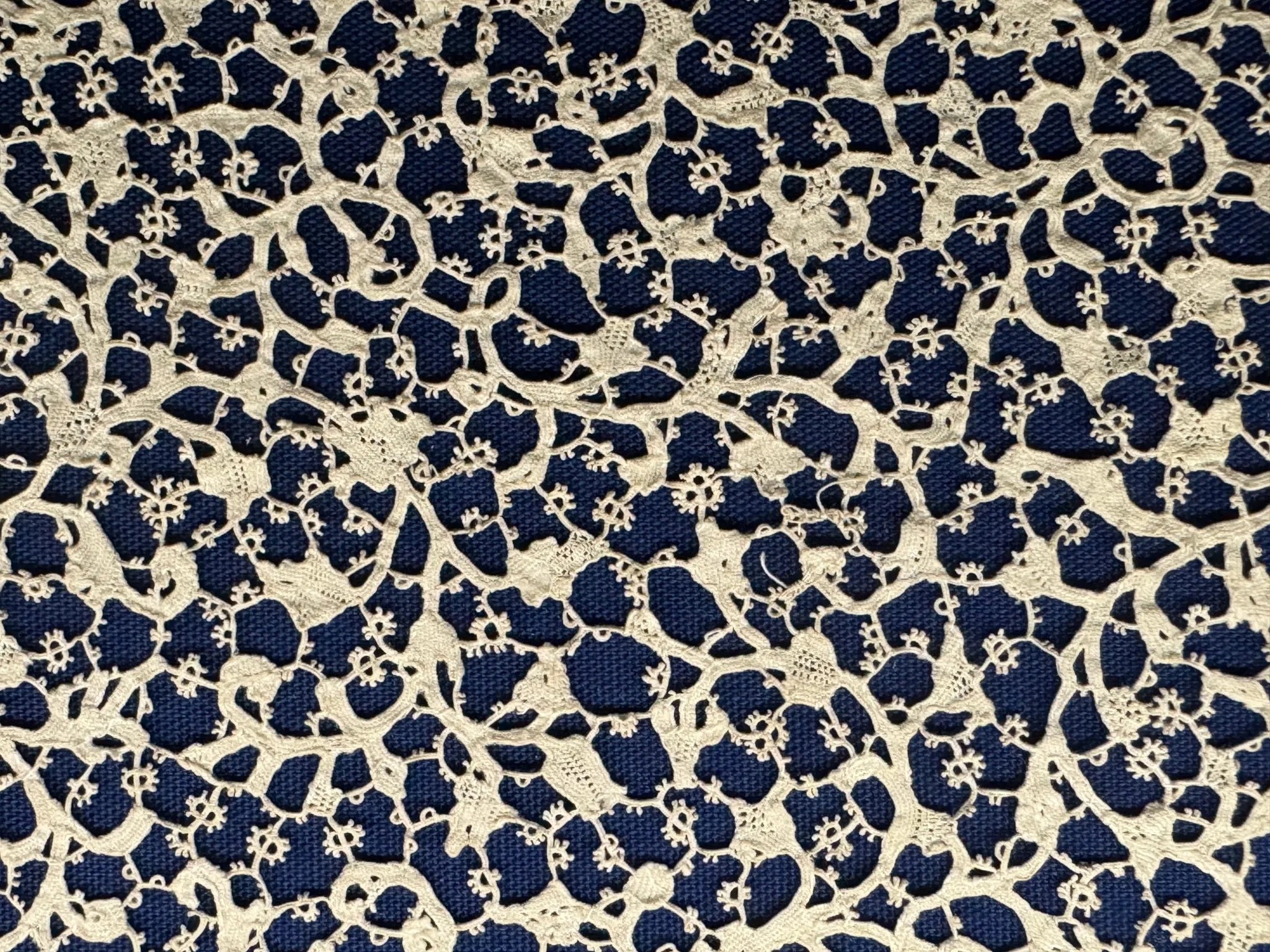
Venetian Needle Lace from 17th or 18th century
I’m pretty late posting this, because I went to the Lace Center in Bruges a week and a half ago. Blog posts are piling up while we’re on the go. We’re headed to northern Norway tomorrow(!), and I still haven’t told you anything about Amsterdam, Oslo or Bergen (and I do have things to say). Sigh.
I almost didn’t go to the Lace Center because I don’t really like lace (except for the piece pictured above, which I’m obsessed with.. I’ve never seen anything like it before and probably never will again). I’m not sure I know anybody who does. However, true textile hound that I am, I do love me a craft, and I was sold on the place when I found out they had lace-making demonstrations. So I went, and of course (of course) I was glad I did.
I went to see the demonstrations first and then went downstairs to the museum part second… but I’m going to do the reverse here, because I want you to have a little history. I will try to make it as un-boring as possible:
Apparently, lace-making techniques were developed in the 16th century in both Flanders and Italy – totally separately but more or less simultaneously (strange but true). There are two prevailing techniques: bobbin lace, which is braided (and what they were making in Bruges), and needle lace, which is based on embroidery stitches. Both are basically the somewhat magical conversion of a plain, very thin thread into a flat, open-work fabric that was considered a luxury product at the time because of the hours and hand-work involved (more on this below).
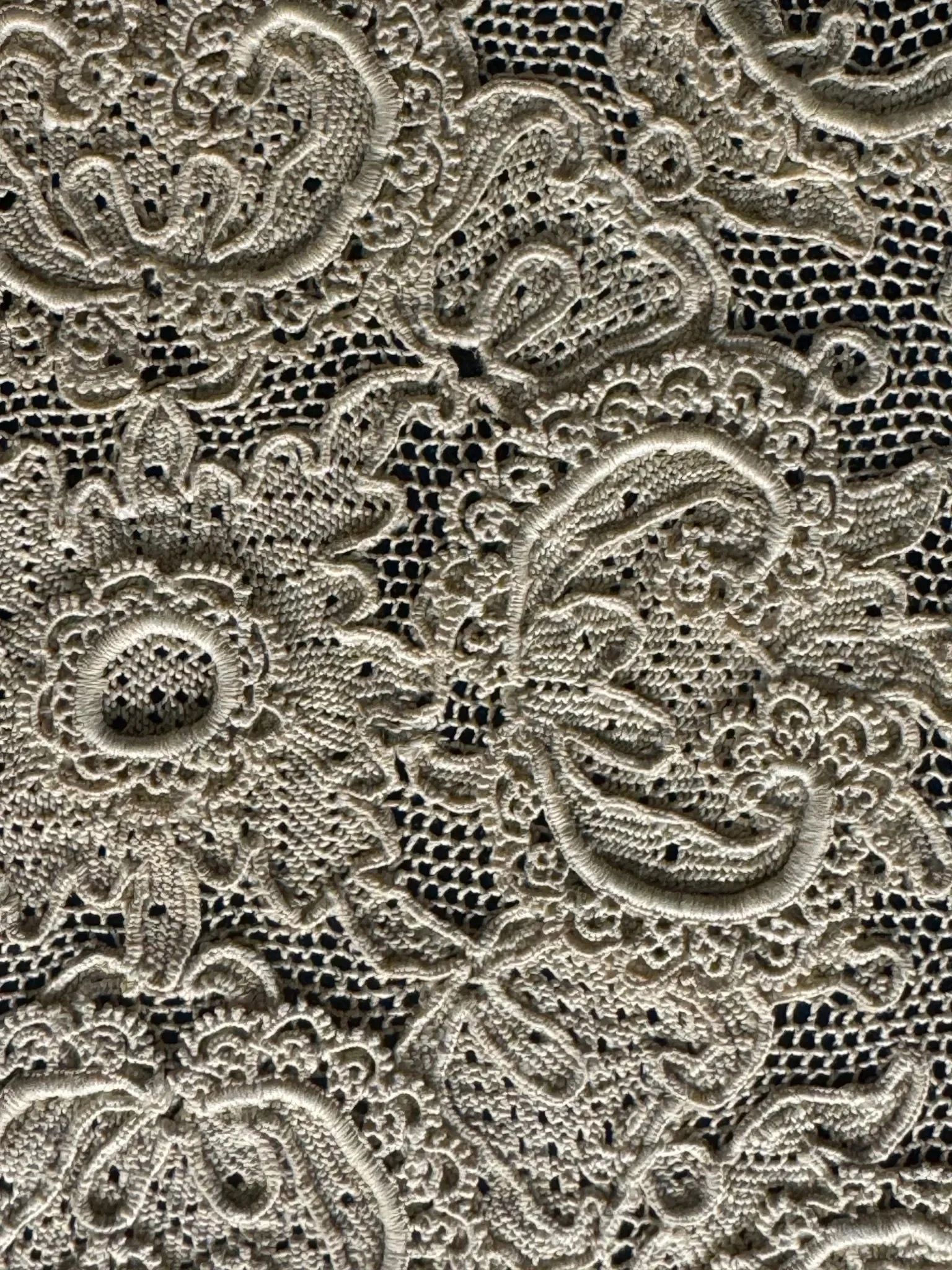
Venetian Needle Lace from 2nd Half of 19th Century
As is often the case with textile crafts, lace was almost exclusively made by women who lived in poor conditions and passed the techniques on from mother to daughter. Eventually there were “lace schools” that would teach young women this trade. Lace-making was also taught in orphanages, convents, etc., in an effort to give women the opportunity to earn a livelihood. Because while exporting other products the Europeans were also exporting their religions, nuns would ultimately teach lace-making to women in China, Peru, India and Japan, where eventually lace came to take on its own meaning within those cultures.
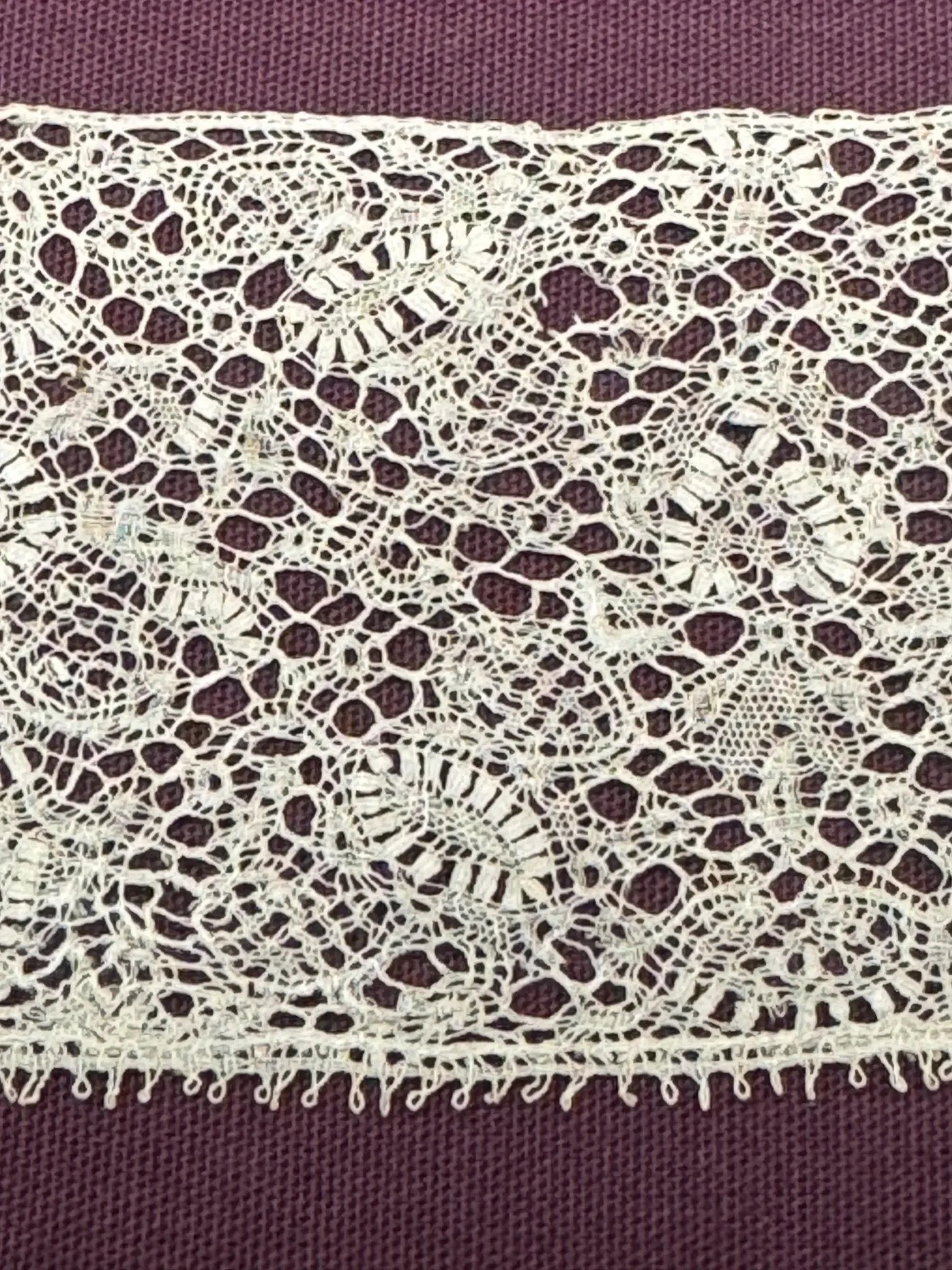
Machine-made lace arrived in the 1800’s, and after that production of hand-made lace declined, and it became an indulgence for the very rich (hand-made being more refined than can be made by machine). After World War II styles also changed and lace fell out of vogue entirely, being considered old-fashioned, as it is today. Handmade lace, meanwhile, is so labor intensive it is now almost exclusively made for the pleasure of making it.
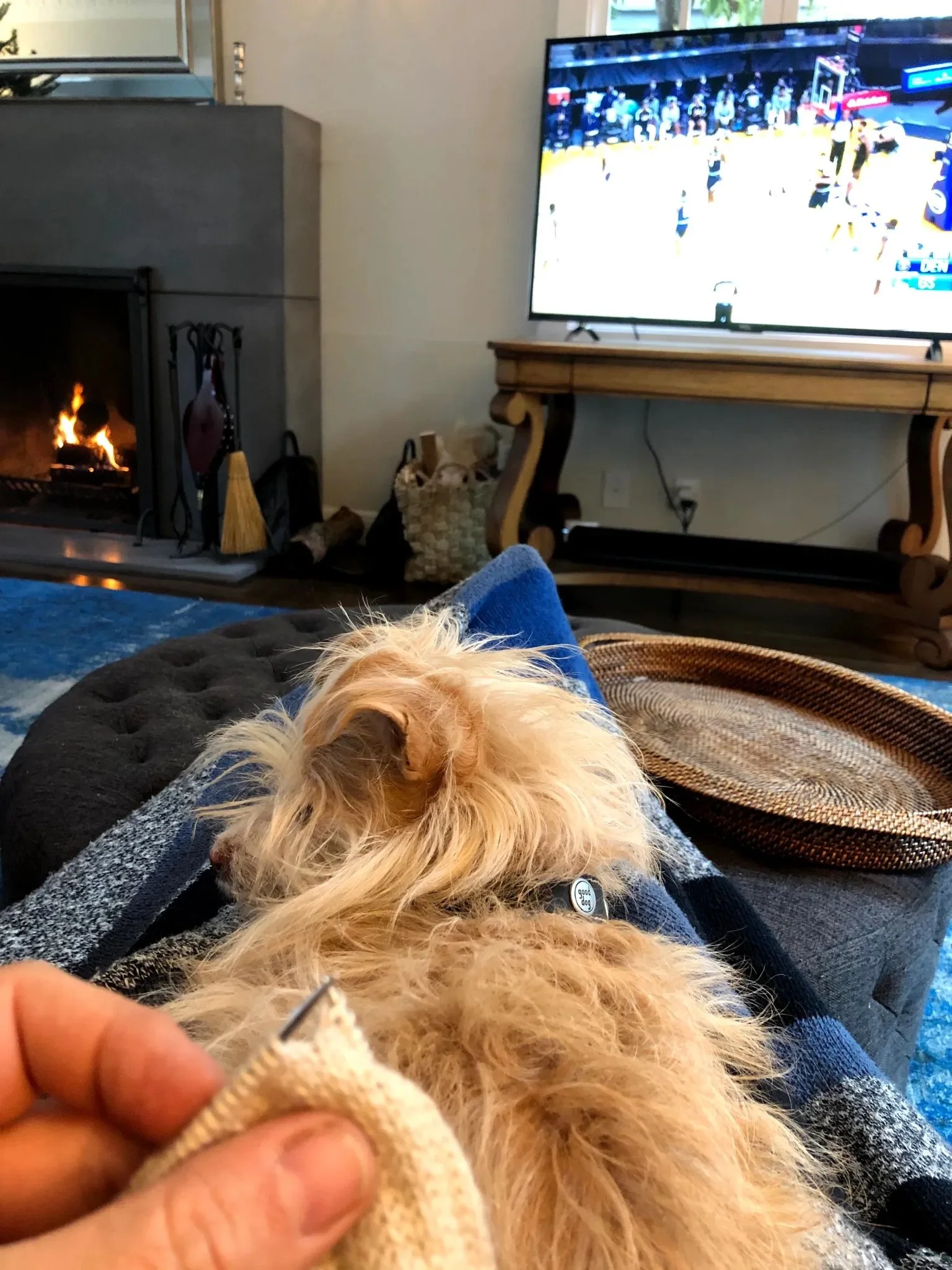
I understand this because I am a knitter. Any knitter will tell you that knitting yourself a sweater is never cost-effective, because yarn is expensive, sweaters take forever to make, and even hand-knits can be purchased now for a reasonable price by comparison. We knit because we love the process. Which, btw, when combined with a fire and basketball on TV is a kind of nirvana.
So without further ado, let me just bring you to… the Lace Room. This was upstairs from the museum. Clearly what happens is people who live in or near Bruges and like to make lace are asked to gather here at a certain time in the afternoon with their projects, to help each other… and so that camera-wielding mopes like me can observe them doing their craft. Not through a window or anything, mind you… tourists just walk around in the room and hover over the nice people trying to struggle through a table doily for their niece or whatever it is they’re working on.
The lace room was full of people of varying skill levels doing a variety of work, and naturally I loved them all. I’ll feature three, as sort of a representation:
The Overachiever
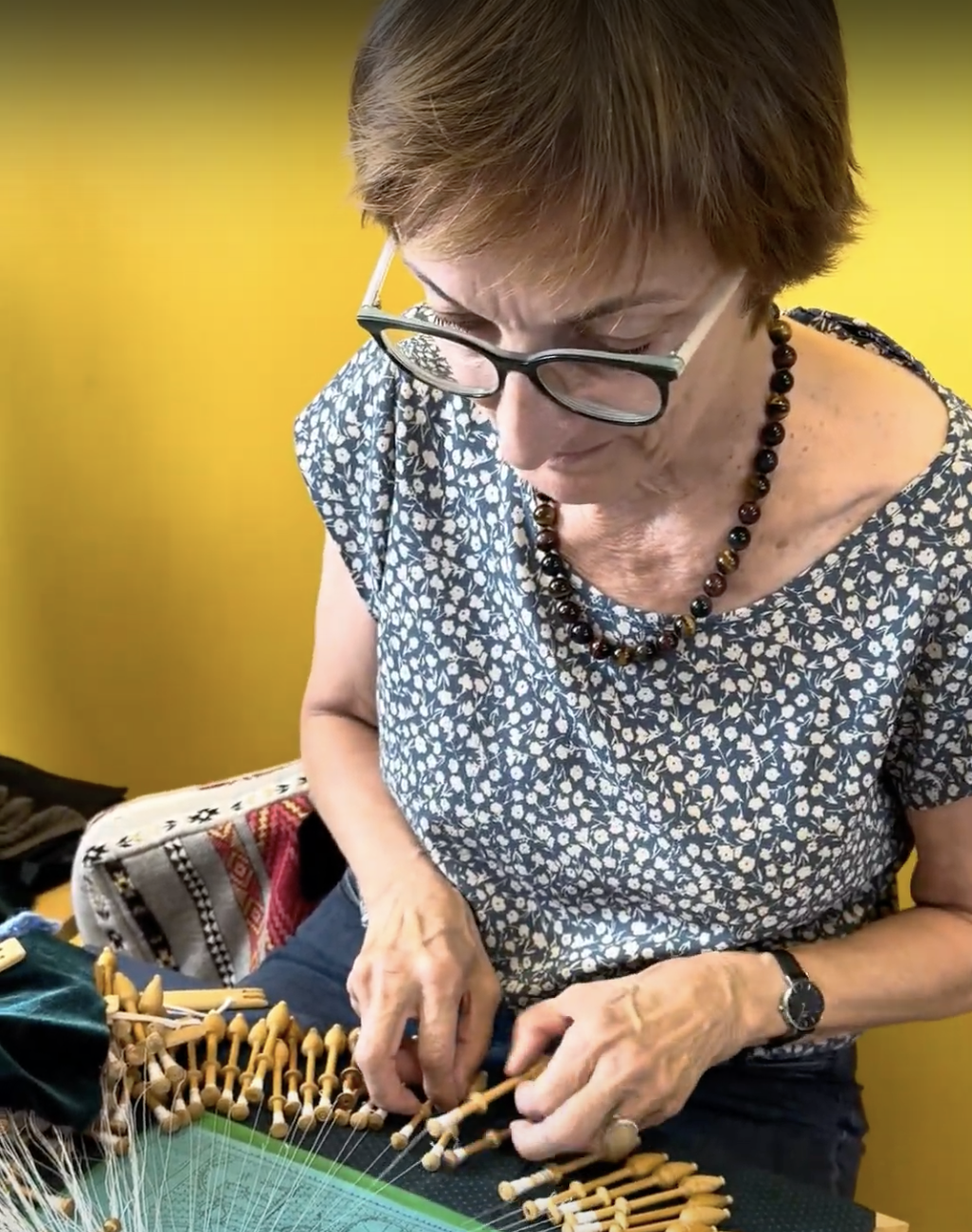
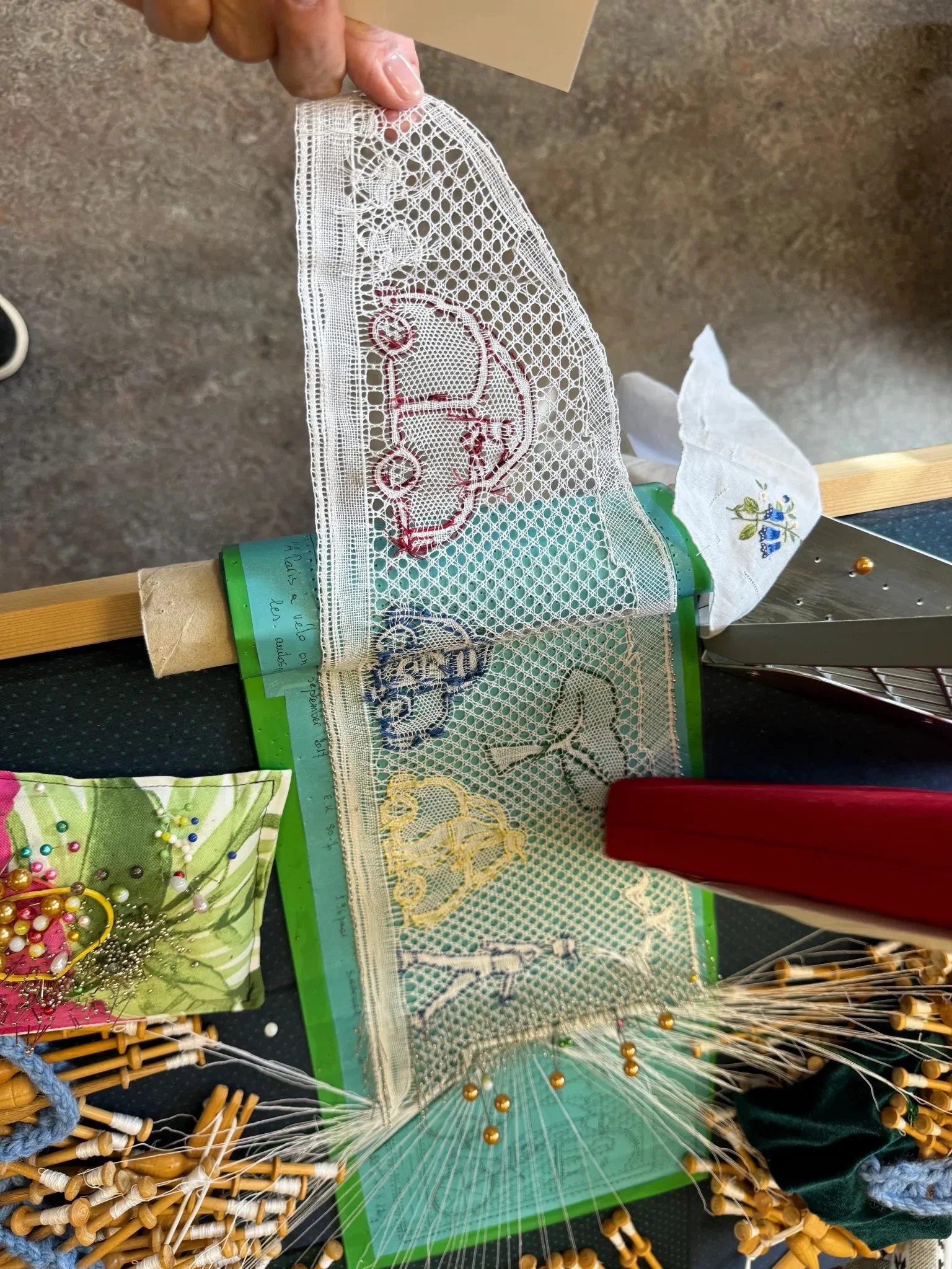
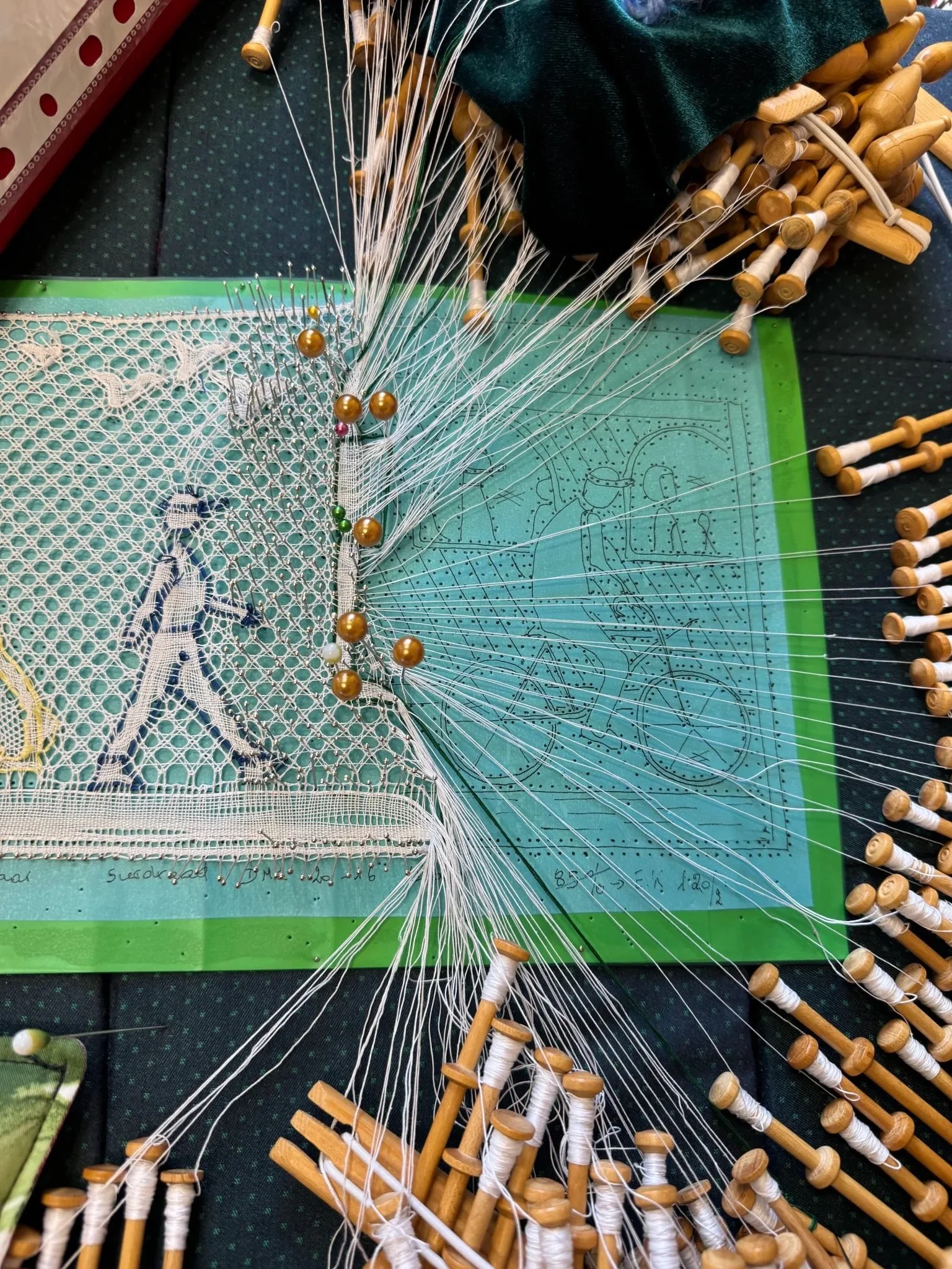
This was the first person I talked to in the room – she was just lovely, spoke a little bit of English, and seemed flattered that I was watching her. She tried to explain to me about the process, but at that point (and still, to be honest) I was unable to get my head around exactly what she was doing and how it resulted in the piece she had already executed, which seemed impossibly ambitious. It was a STREET SCENE in lace, for god’s sake – with cars and a tree and people walking around. I mean – I have no idea what she was going to do with this creation. I don’t think she did, either. She was the first one to say to me, “Yeah, the only reason to do this is because you like doing it. It’s definitely not worth the time you put in.”
The Newbie
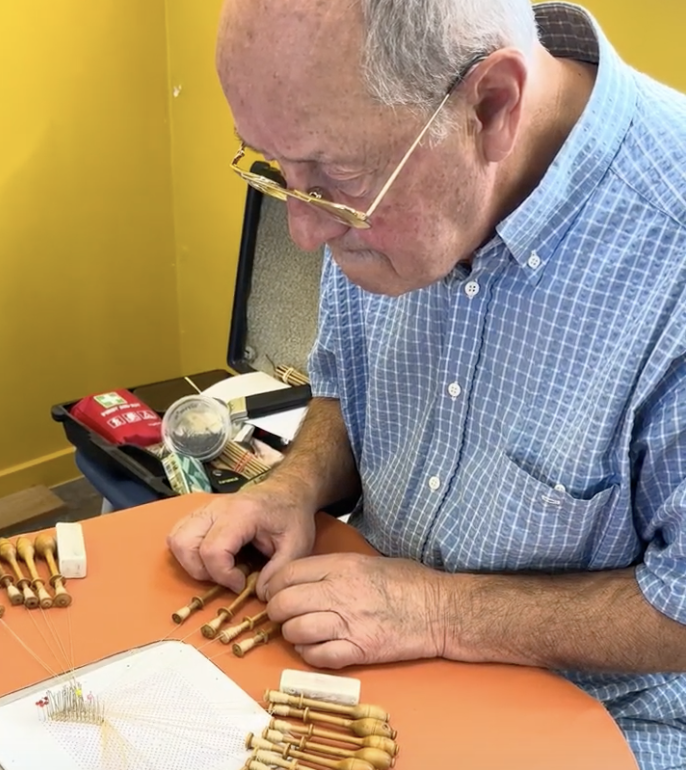
This guy I loved the most, because he was doing it EXACTLY how I would have… very methodically, somewhat nervously, with loooooong pauses after each pin was placed to make sure he hadn’t done something stupid. I felt a kinship.
My guy explained to me there is a color-coding system for the stitches used (!), and that the patterns they are following actually don’t help you unless you know the code. I guess this also means that color-blind people don’t get to make lace, which seems unfair.
The Boss

She was wiping the floor with everyone else, and they all knew it. It was crazy. I’ll try to get a video up soon.
After I’d been in the room a while it suddenly dawned on me how much preparation is required to even get to the point where you can sit down and start attempting to do what these people are doing. I mean loading up all those little bobbins… then lining them up in some way that makes sense, and trying to keep them all straight. It reminded me of loom weaving, and how 80 percent of the game is dressing (setting up) the loom… the weaving is the easy part, believe it or not.
The whole thing is just mind-blowing. But they were all clearly into it in a way that was inspiring to see.
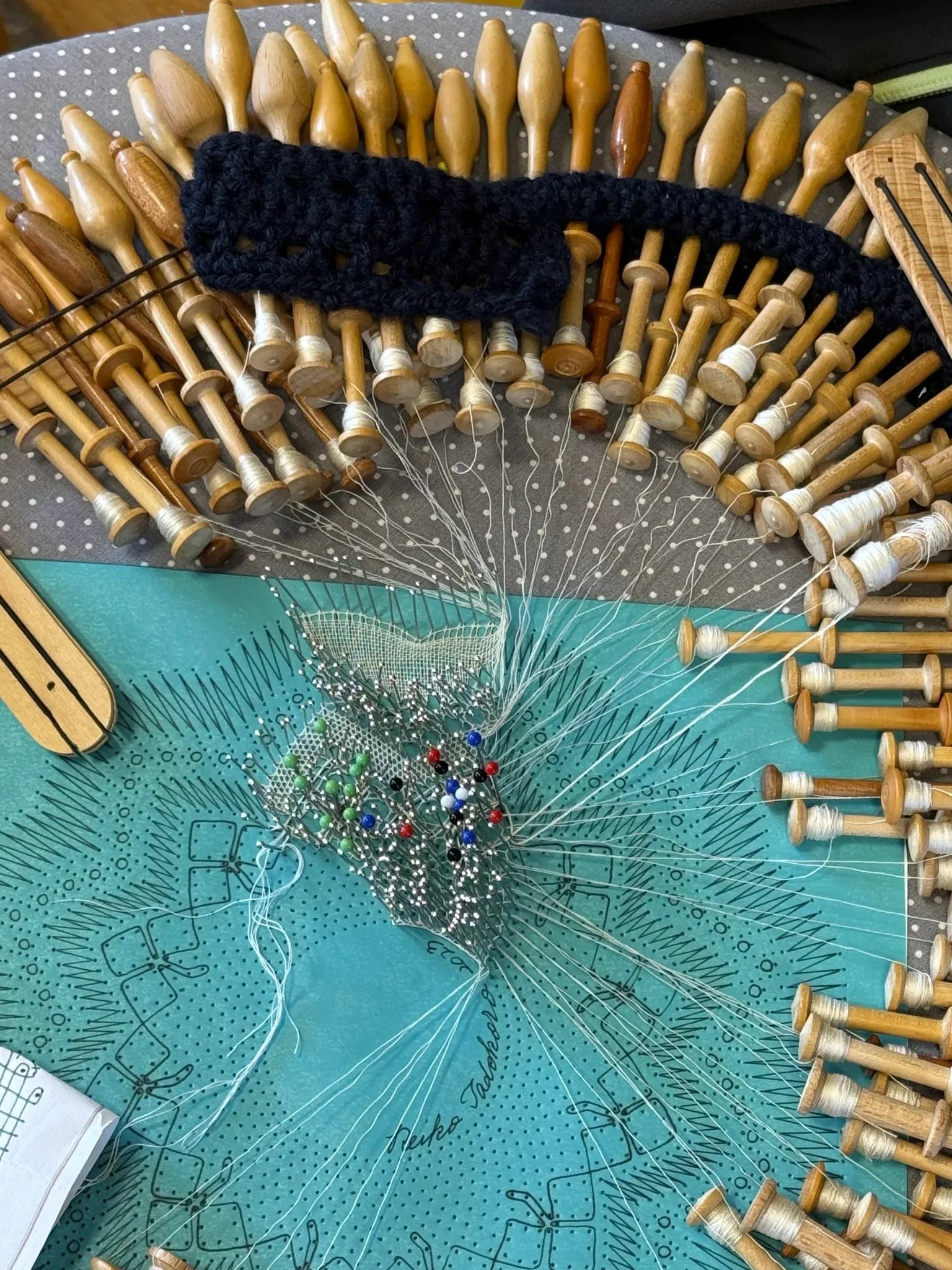
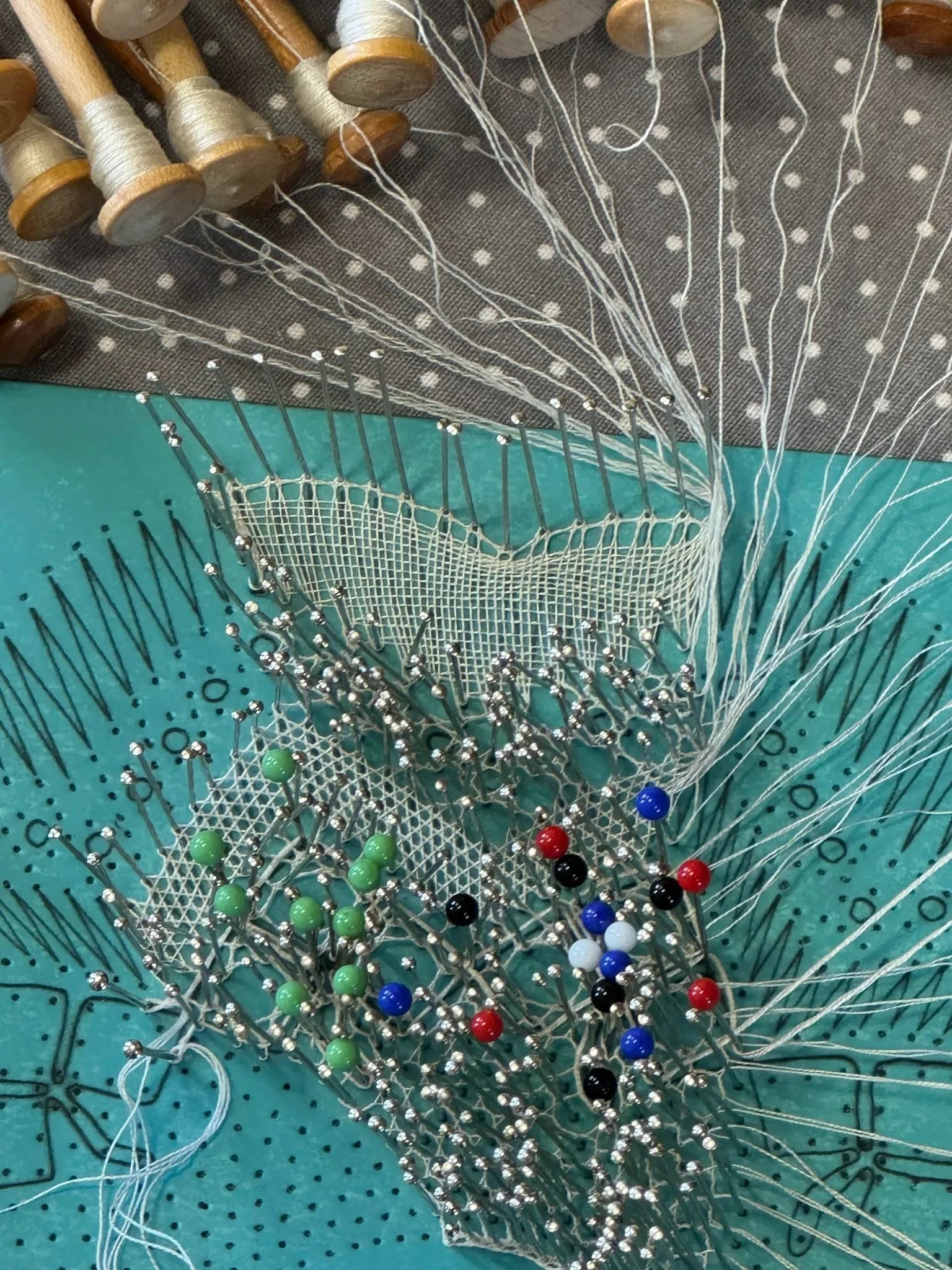
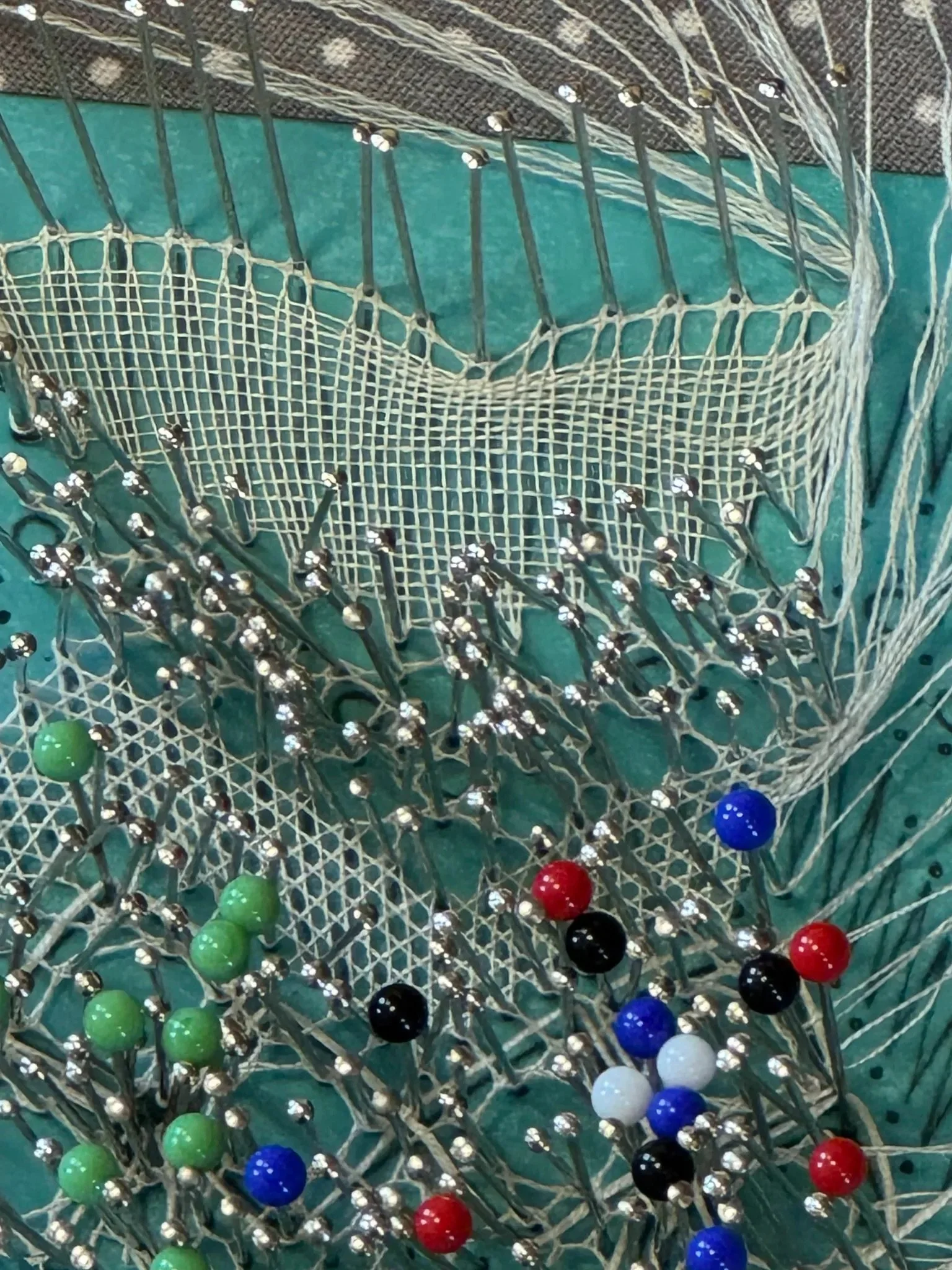
So. Do I love lace now? Well, no. As usual, it’s the process that intrigues me… not necessarily the end product. Some of my new lace-making friends were executing very traditional patterns, and some were not. Many were using different colored and types of thread. I saw potential for things that don’t have the air of “grandma”… but only potential – no “aha” moments.
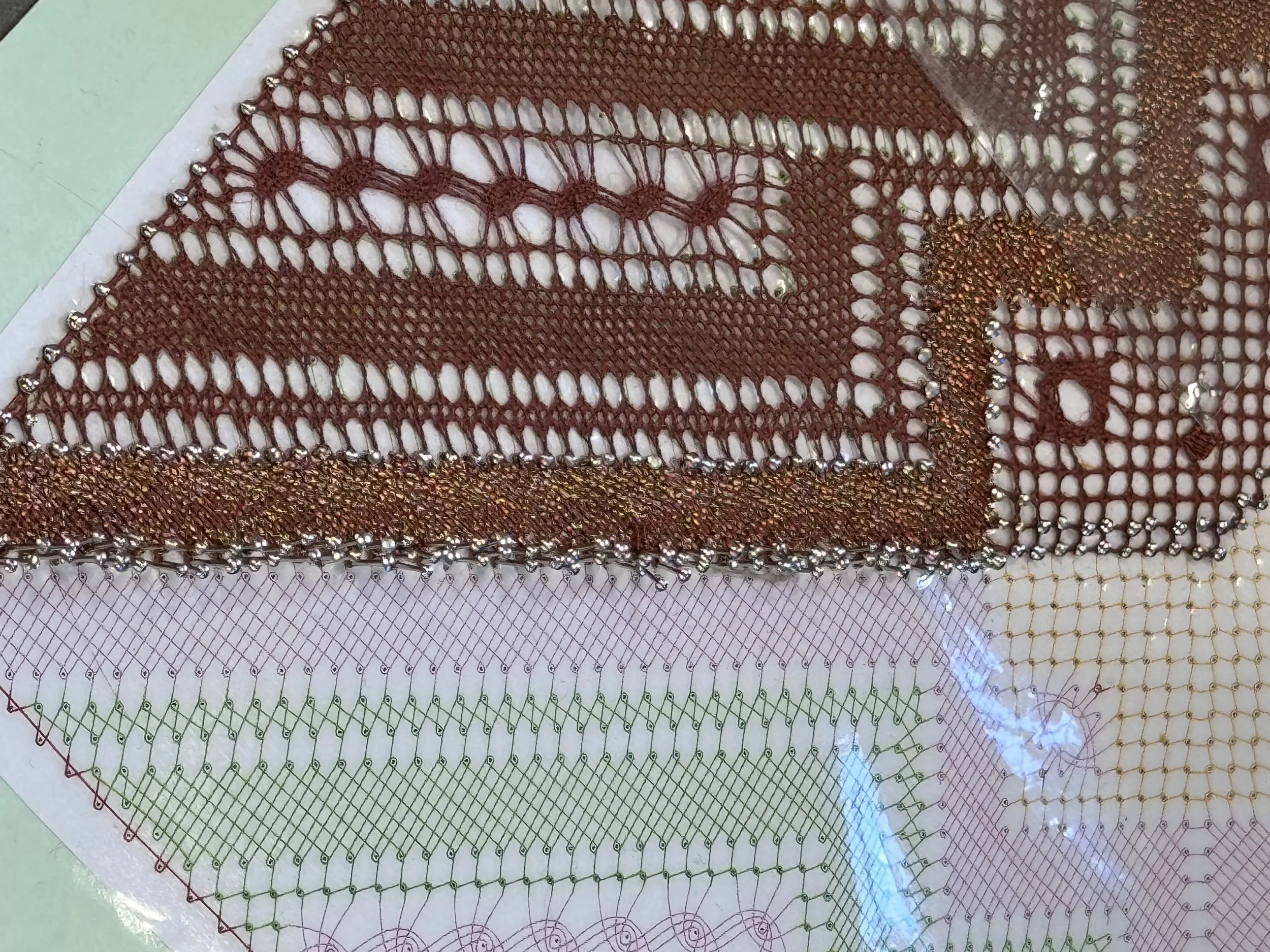
I have a sense that lace patterns that would appeal to a more modern sensibility are being created by textile artists, who focus entirely on form rather than function. Like this lovely piece that was hanging in the museum, and was lit so that you could admire the shadows it created as much as the piece itself:
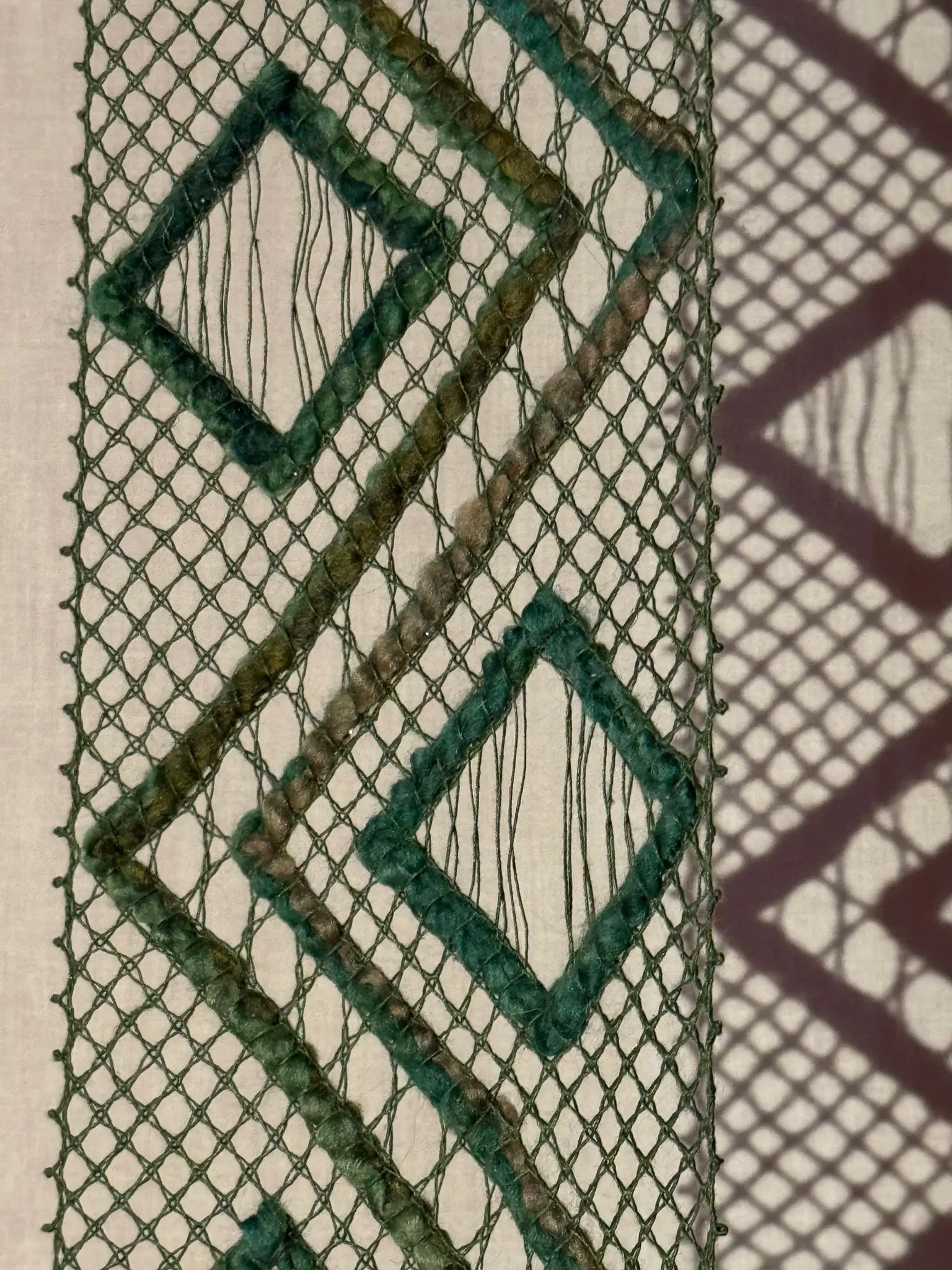
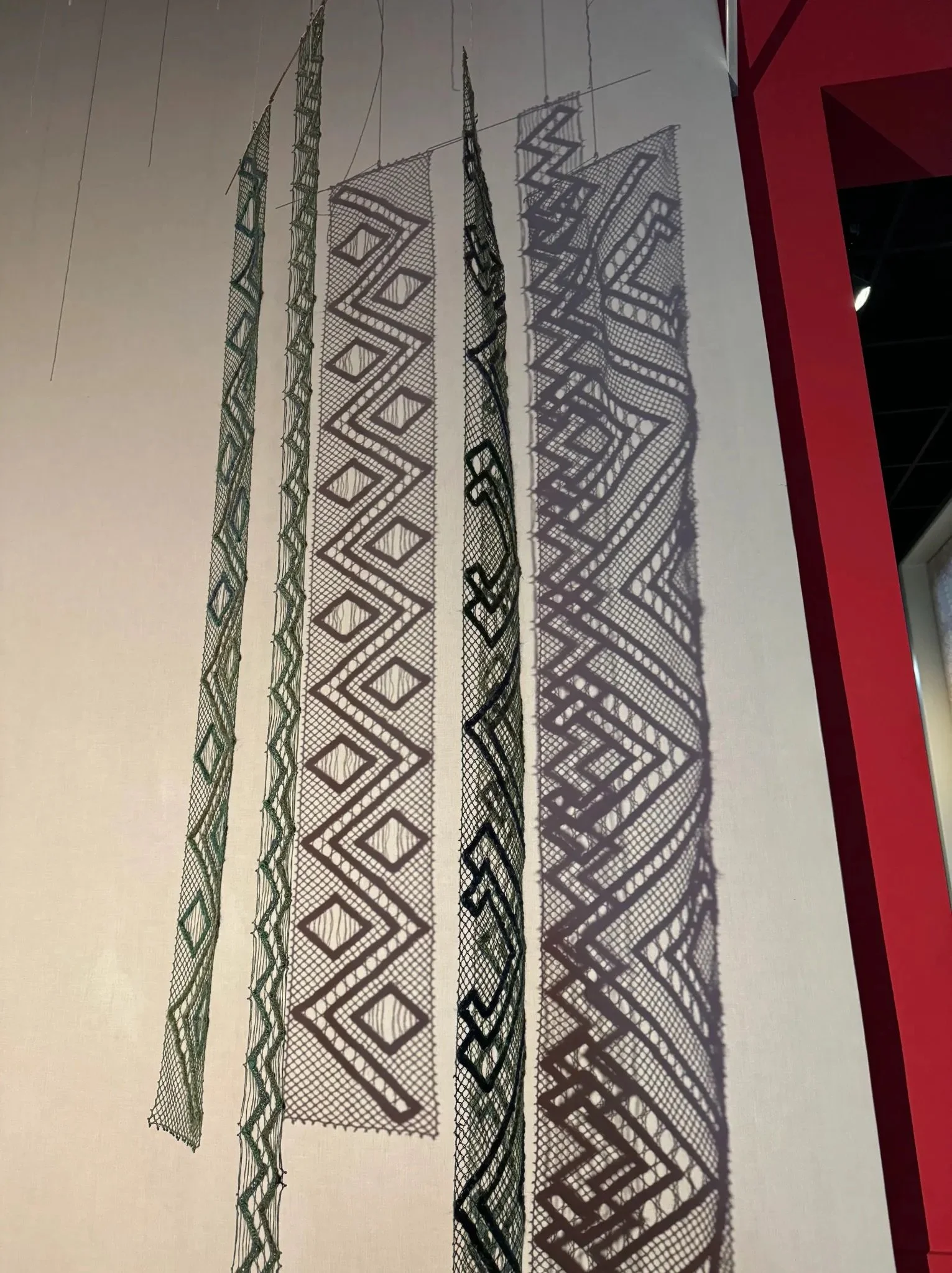
Art doesn’t necessarily need to concern itself with function, nor does craft. But since I do have a professional interest in bringing time-honored artisan fabrications into the home as saleable, largely functional product, that’s always where my head goes. Part of this interest lies in a desire to give the general public an opportunity to appreciate the traditions and skills these techniques display (you’re welcome). Providing a wider audience for these products can also improve the economic circumstances for artisans in many parts of the world (although the folks in Bruges seem to be doing just fine). And last but certainly not least: artisan product is by definition sustainable – almost always using natural materials, not being mass-produced, and not ultimately contributing to landfill in the way that fast-fashion almost always does.
Lace seems to highlight a fairly common issue in the Home product industry: an artisan fabrication can be really compelling in itself, but if the designs and patterns/motifs used remain stagnant the end product is sort of locked in a particular time and place and doesn’t feel relevant to today’s home. That makes it hard for people like me to pick it up for a broader market – an opportunity lost, as the craft become relegated to a very limited, niche market that can’t really sustain the tradition, which can die a slow death if there’s no economic motivation to keep it going.
To illustrate my point: I was the “young” person in the Lace Room. So… yeah.
Just like everything else, traditional techniques have to evolve if they are to survive.