My Swedish Towel
Stockholm, October 2024
In October of 2024, I found myself wandering around Stockholm while my husband brought a group of his Executive MBA students to tour THE original Ikea store. Yes, I thought about going with them, but I really wasn’t up for the technical lecture to follow. Nor was the dog, who I had to take with me wherever I went because… well… that’s a story for another day.
As I do, I looked online for a good source for local textiles and found a shop not too far from the hotel.
I confess I was not able to do a ton of textile research before arriving in Sweden, and because of the student tour we didn’t have much flexibility with our schedule. We were really limited to Stockholm itself, unless we wanted to drive for many hours inland just to drive back the same day and fly out. This was a shame, because it turns out a lot of the fabric mills in Sweden are in the countryside… and I do love a fabric mill!
But of course “having” to stay in Stockholm is not what anyone would call a hardship. I really enjoyed this city. By the morning of the Ikea trip, I had already visited the Vasa , the ABBA Museum, wonderful Gamla Stan (which means Old Town), and gone mushroom hunting with the locals (shout out to Antonella, who made us an inspired shiitake soup).
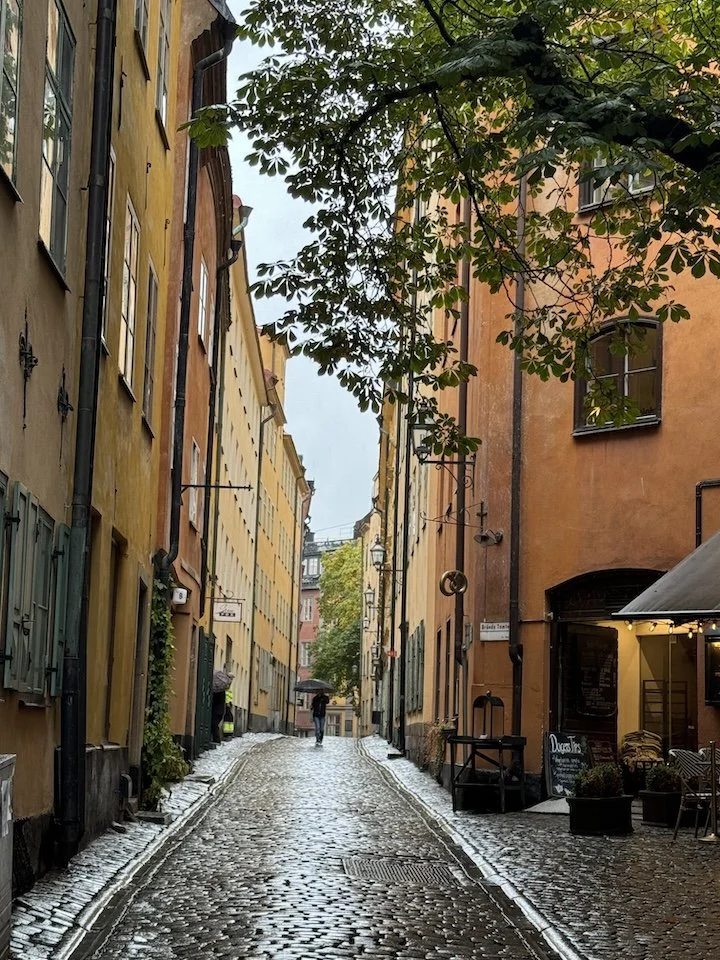
Gamla Stan

Waterfront (one of many)
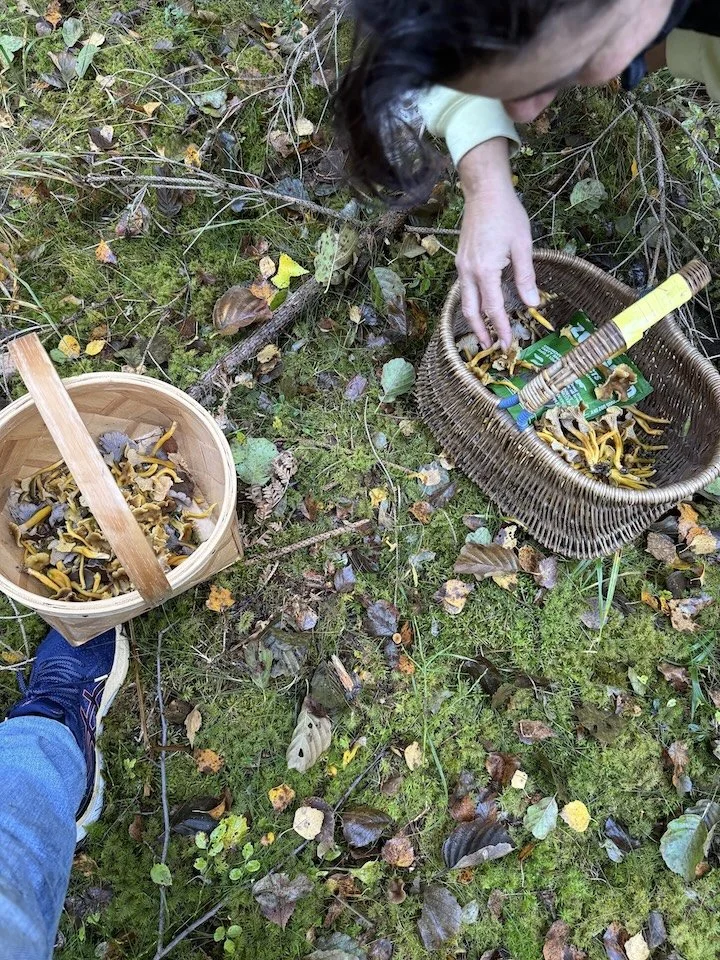
Mushroom hunting
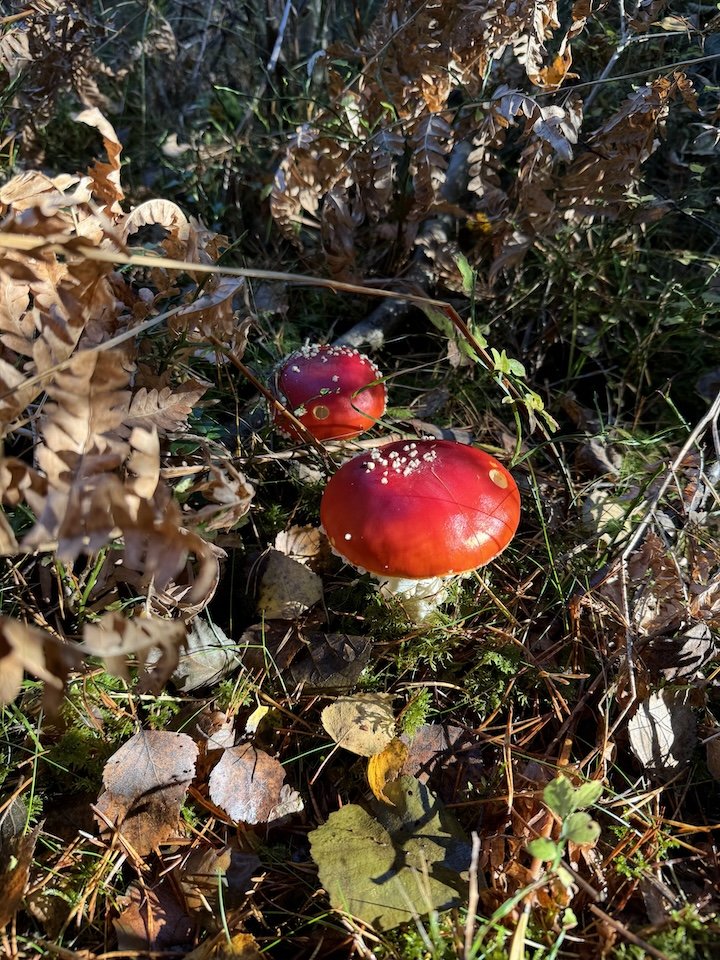
These actually exist - they are not a Disney invention - but these we DO NOT EAT!
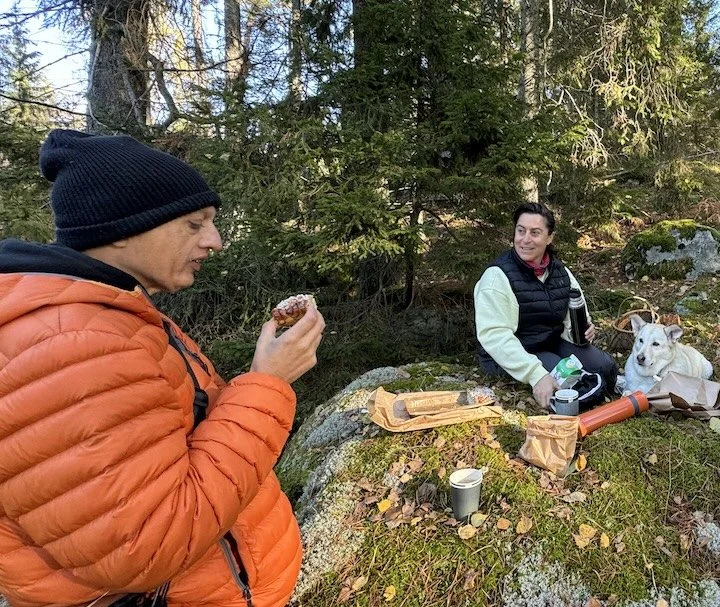
Vijay, Antonella and her dog. Of course we brought Fika.
I loved it all, but was ready to just do a pure, extended wander on my own. This is how I ended up at Klässbols - somehow the linen supplier to the Swedish royal court and the Nobel prize people.
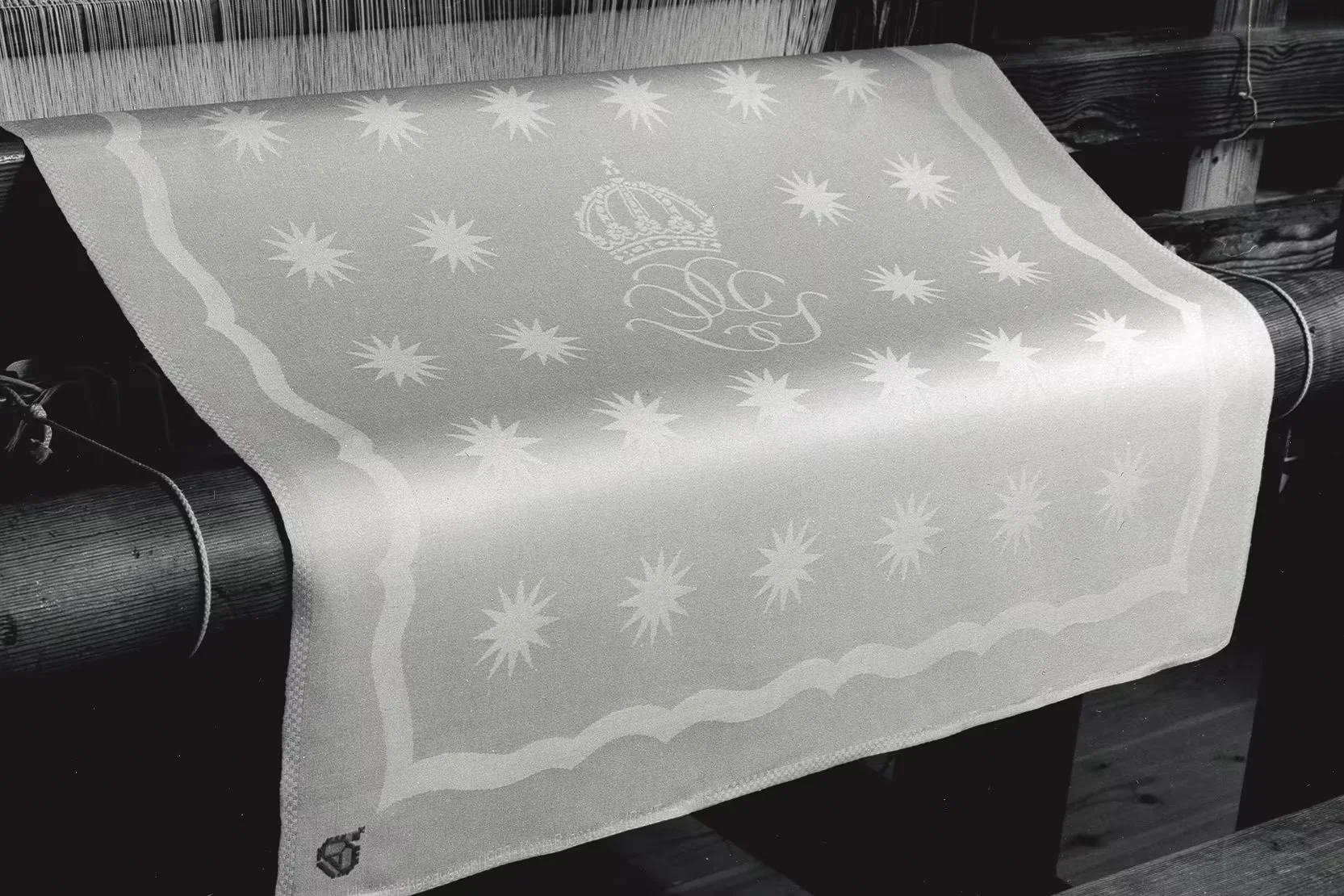
A royal napkin (!)
Klässbols is a prime example of a certain type of Swedish weaving tradition that I encountered over and over again. Somebody’s great great grandfather saves up his money to buy a loom and starts a weaving business, which grows over the years and the family carries on the business generation after generation. The weaving is always of fine quality, always in pure linen and/or cotton, and with mostly traditional, often quite subtle motifs in plain weave and jacquard. No one is breaking any kind of new ground here, design-wise: these are quiet, basic, heirloom pieces meant to be properly cared for and last for many years.
None of these companies are behemoth businesses, and they are barely known outside of Sweden. I imagine this has to do with the fact that even though these are luxury-quality products, they’re still tablecloths, table runners, and towels of fairly simple design. It would be hard for them to take the international market by storm at their price point…
….unless, of course, you’re talking about total textile-heads who are into that sort of thing and willing to pay the price.
So here I come, walking through the door.
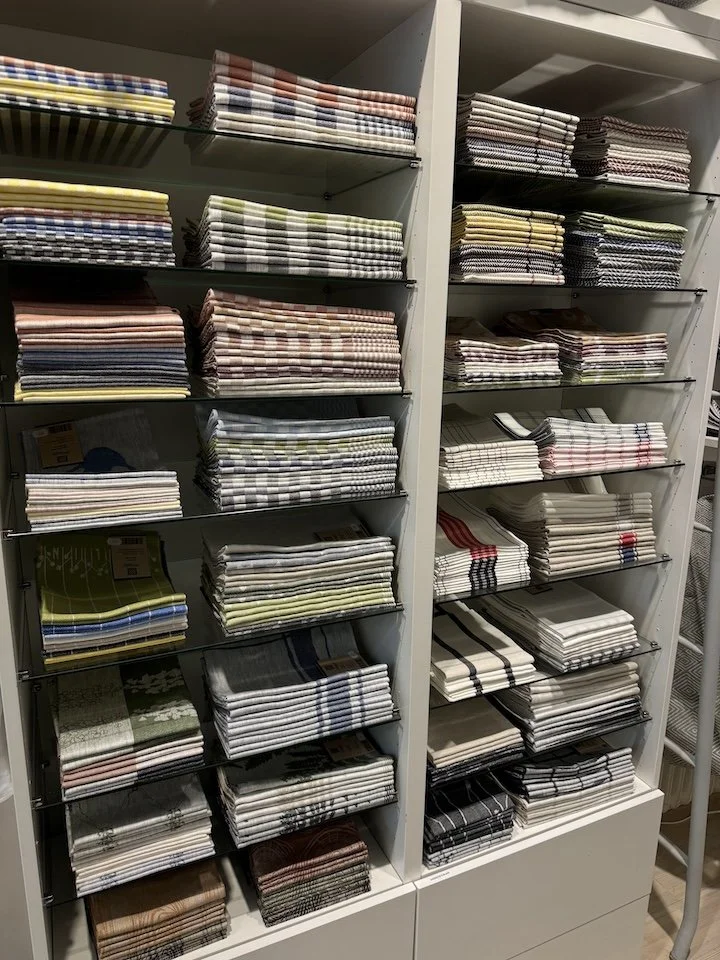
Inside the Klässbols shop
Sometimes I wonder how many other people get truly pumped by shelf upon shelf of neatly folded linens. There can’t be that many of us… but I’m sure I’m not alone, either.
At the very least, the people who work in these establishments tend to have a certain appreciation - and the woman behind counter at Klassbols was no exception. I got to talking to her (shocker), and it turns out she was a gold mine of information. Also just a delightful person.
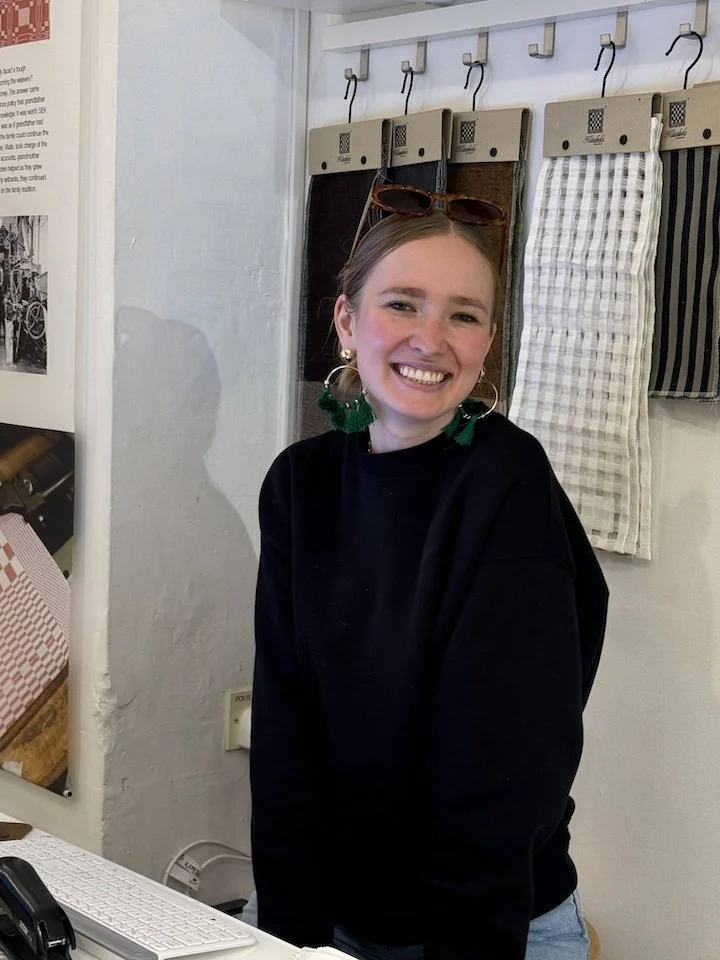
Ellen!
Her name is Ellen Christensson, and she is a textile artist in her own right, moonlighting with historical associations to recreate/re-weave traditional textiles found in museums and archives. Not only did she gently school me on the fact that Sweden has a very long, well-established weaving tradition (Who knew? The Swedes, but they seem to be keeping it to themselves), she then referred me to a local silk mill/museum where I could further indulge my interests, and where her creations are sold in the gift shop as historical reproductions (https://www.kasiden.se/en/). I asked for her Instagram handle so I could mention pass it on: https://www.instagram.com/ellenchristensson/.
Here is one of her pieces on the loom:
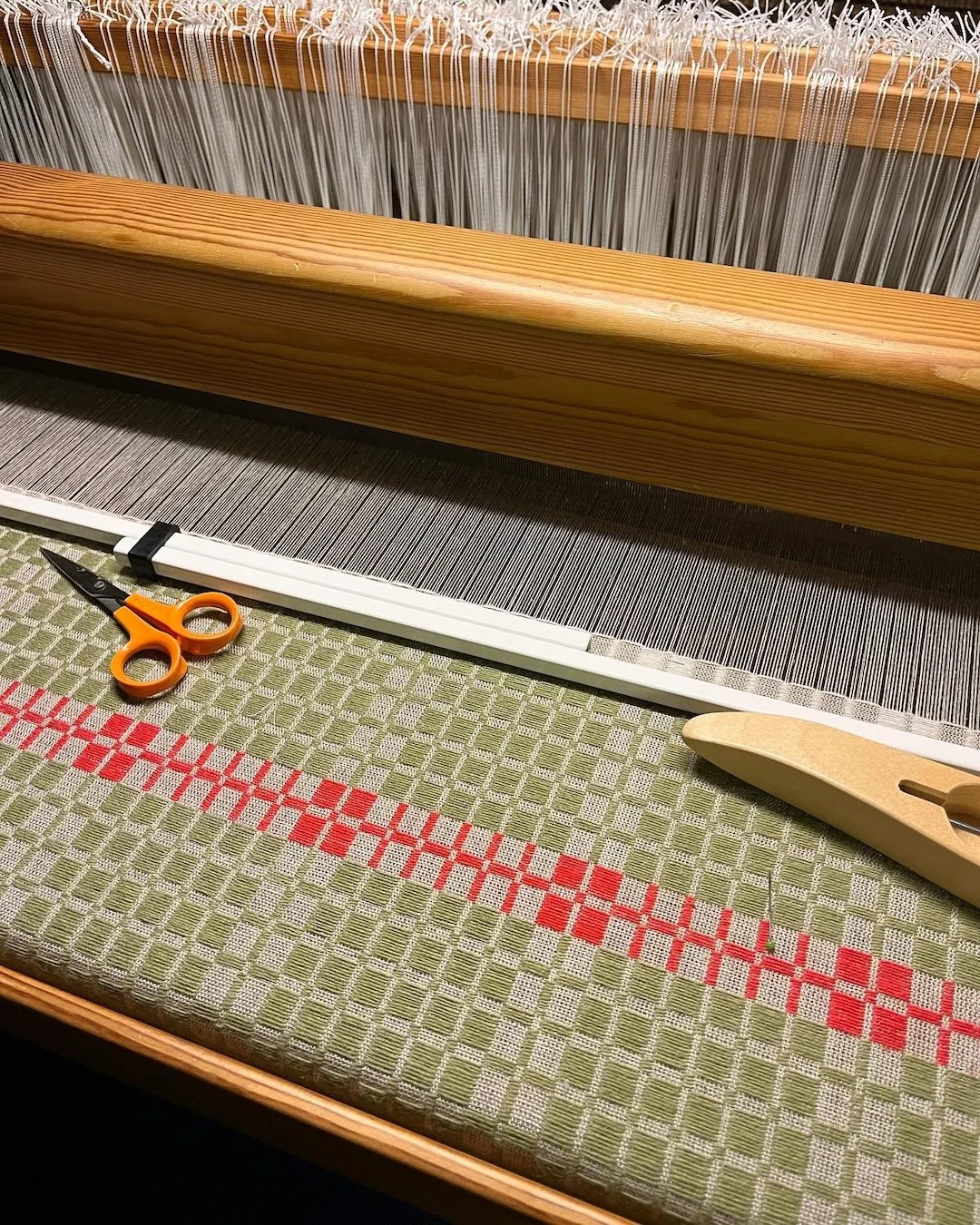
I mean come on…
Not wanting to load up on linens I would have to lug around Scandinavia for several more weeks (in addition to the dog in a bag), I limited my purchases to two things I felt I could not leave the shop without (neither of which I technically needed)
Thing one:
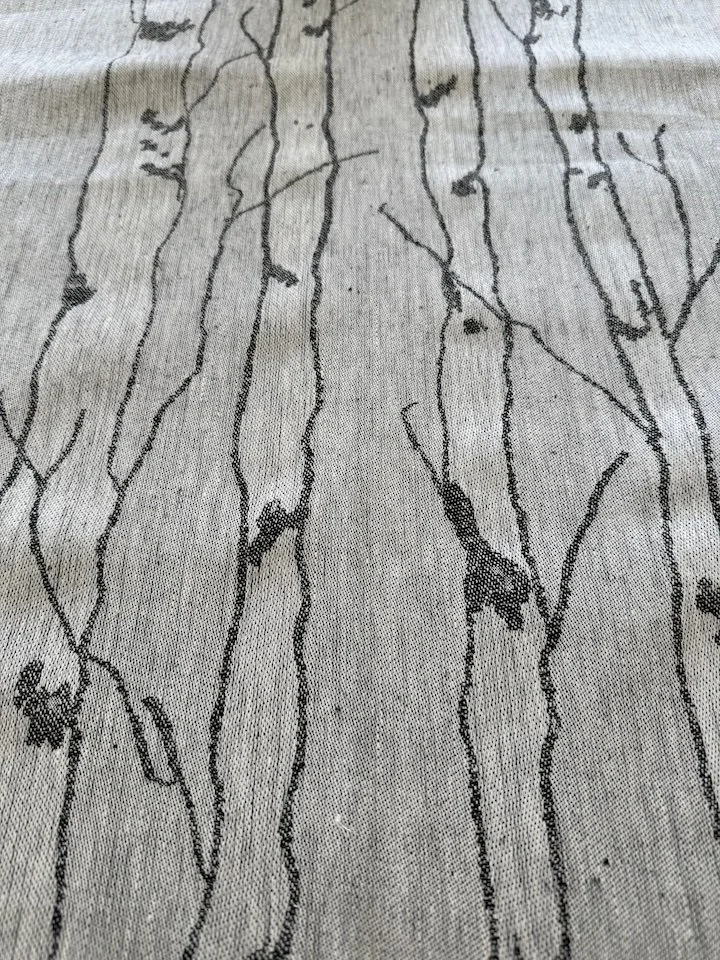
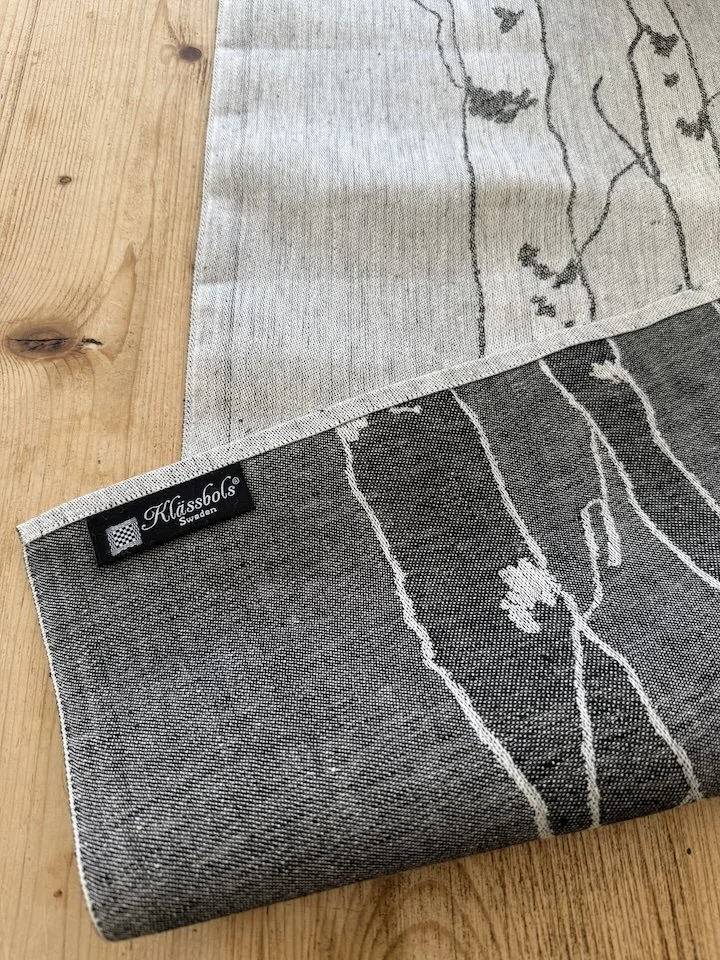
This linen table runner is jacquard-woven in a birch tree design (muy Scandinavian). Because it’s jacquard, it is therefore reversible from light-on-dark to dark-on-light, which I love.
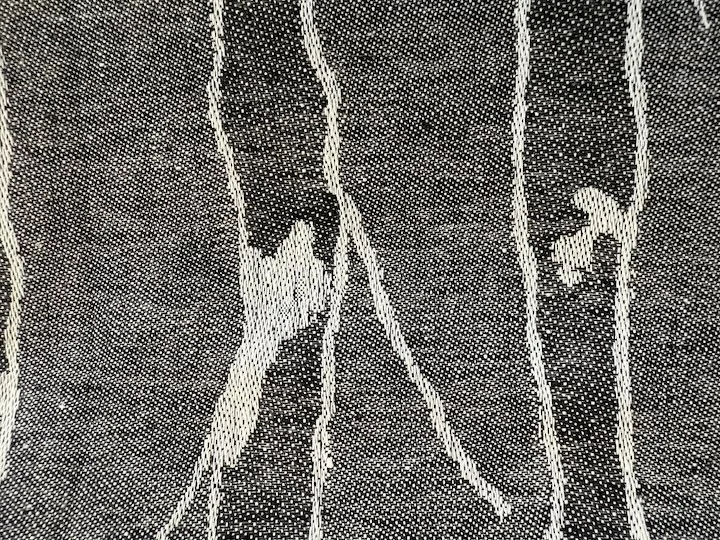
The yarns have a a nice variegation and fleck to them, in keeping with the natural motif, AND the interior portions of the tree trunks are woven slightly differently to give them more density - on both the light and the dark sides. The kind of detail that blows me away.
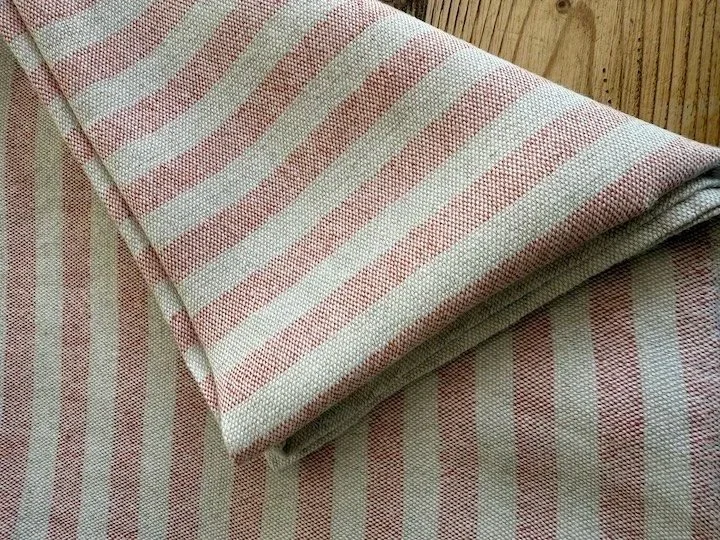
Thing two (My Swedish Towel):
Were you wondering when I was going to get to it?
There is something about this particular stripe in this particular color that called to me, and I had to have it.
It makes me laugh, the way this thing epitomizes the whole Swedish weaving thing. It’s an unapologetically basic textile product: 100% linen, plain weave, striped. Look closer, though, and you start to see the details - like how they wove the selvedges to be more durable, or how they sewed labels on the top AND the bottom, so you can hang it from whichever end you like.
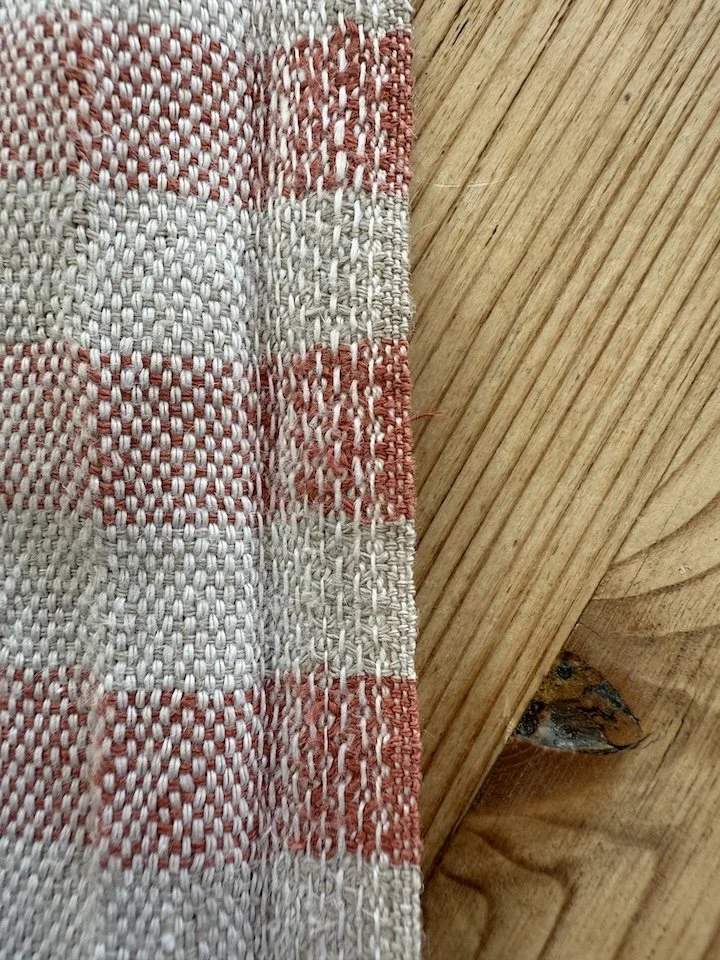
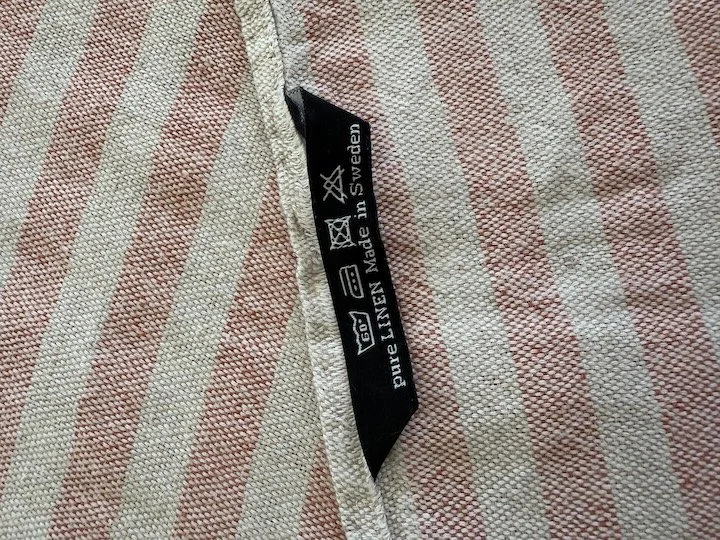
But here’s the thing: I am not typically a flat-weave towel person. I am solidly American in a lot of funny, random ways… and one of those is that I like a nice, fluffy, terry bath towel. Only - after our Scandinavian adventures were over and we finally landed in our Paris apartment - I didn’t have my own fluffy towels, so I started using this one.
I have never stopped.
I’m not saying I will now evermore only use flat-weave towels. I AM saying that I will be using this particular towel for as long as I possibly can. It feels like it will last forever… so maybe that long. This thing is 100% high-quality linen so it’s super thirsty, the drape on it is incredible for the same reason (I tried to take good pictures, but they really don’t do it justice), and of course it dries in four seconds. It’s super soft (in a linen-y sort of way, not in the “we added viscose for hand-feel” way), and it’s only getting softer… but it also feels substantial. Like it’s not going anywhere. Which of course speaks to the inherent sustainability of a textile product in a natural fiber that is not going to end up in landfill any time soon.
I’m borderline obsessed.
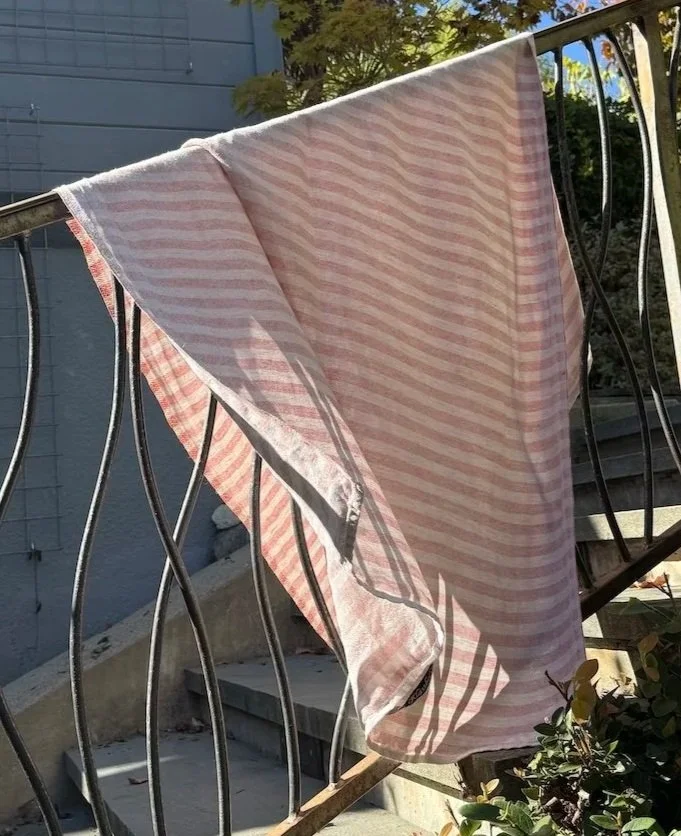
The photo stylings of J. Black
And now I’m about to get philosophical (“so - what can we all learn from this Swedish towel?”)… drop off if you must - I will understand.
Often when we talk about “artisan textiles,” we envision very expressive, handmade items that communicate a specific cultural tradition in an unmistakable way. I have fallen hard for SO many of these, have worked with artisans to develop them for the US market, and have more than a few in my home.
There is, however, another category of artisan textiles that is more like my Swedish towel. These also feature time-honored motifs, materials and techniques… but not ones necessarily unique to a particular culture. A stripe is a stripe, after all… who knows where it originated? (Fine - somebody does, but alas it is not me). Linen is linen, plain weave is plain weave. They may not even be made entirely by hand. What makes them “artisan,” in my view, is the careful attention paid to all of these things at every step: the care with which materials, designs and colors are selected, the uncompromising quality, the obsession over details, the consistency over decades… even hundreds of years, in some cases.
The tradition they come from is that of a family business making things the best way they know how, having learned from the generations that came before.
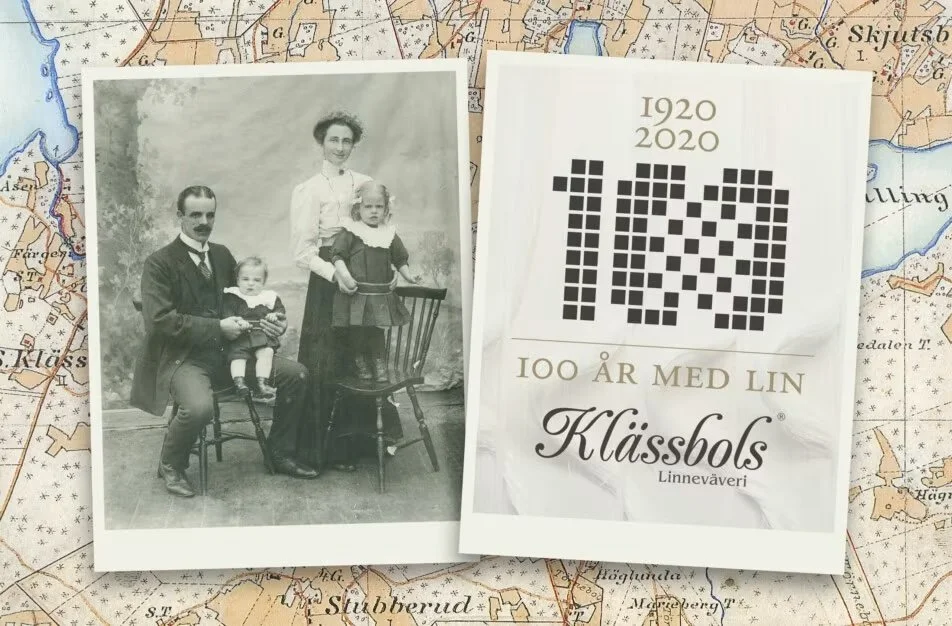
What they express, maybe more than anything else, is pride.