Harris Tweed
Scotland, July 2019
When we were planning our Summer trip in 2019, it was my turn to choose the destination. I had three criteria:
We only had a couple of weeks, because we were dropping our kid off to camp counselor training in Minnesota and picking her up afterward… so we were going to one place and parking it.
I refused to go anywhere hot. 75 degrees is my max. They don’t call me “Grumpy Heat Lady” for nothing.
I insisted on going someplace where my husband didn’t know anyone. This was going to be our first trip together in a while - just us - and I wanted us to spend the time together NOT peppered with visits to people he knows around the world and never gets to see (and that I have never even heard of).
People who don’t know Vijay won’t understand how tall of an order this actually is. Without getting into it… I will just say that after much research, the safest bet outside of an antarctic expedition seemed to be the Outer Hebrides of Scotland. These are island far off the Scottish coast… not the near ones, like Islay or the Isle of Skye, but the OUTER ones that are a solid 3 hour ferry ride from the west coast.
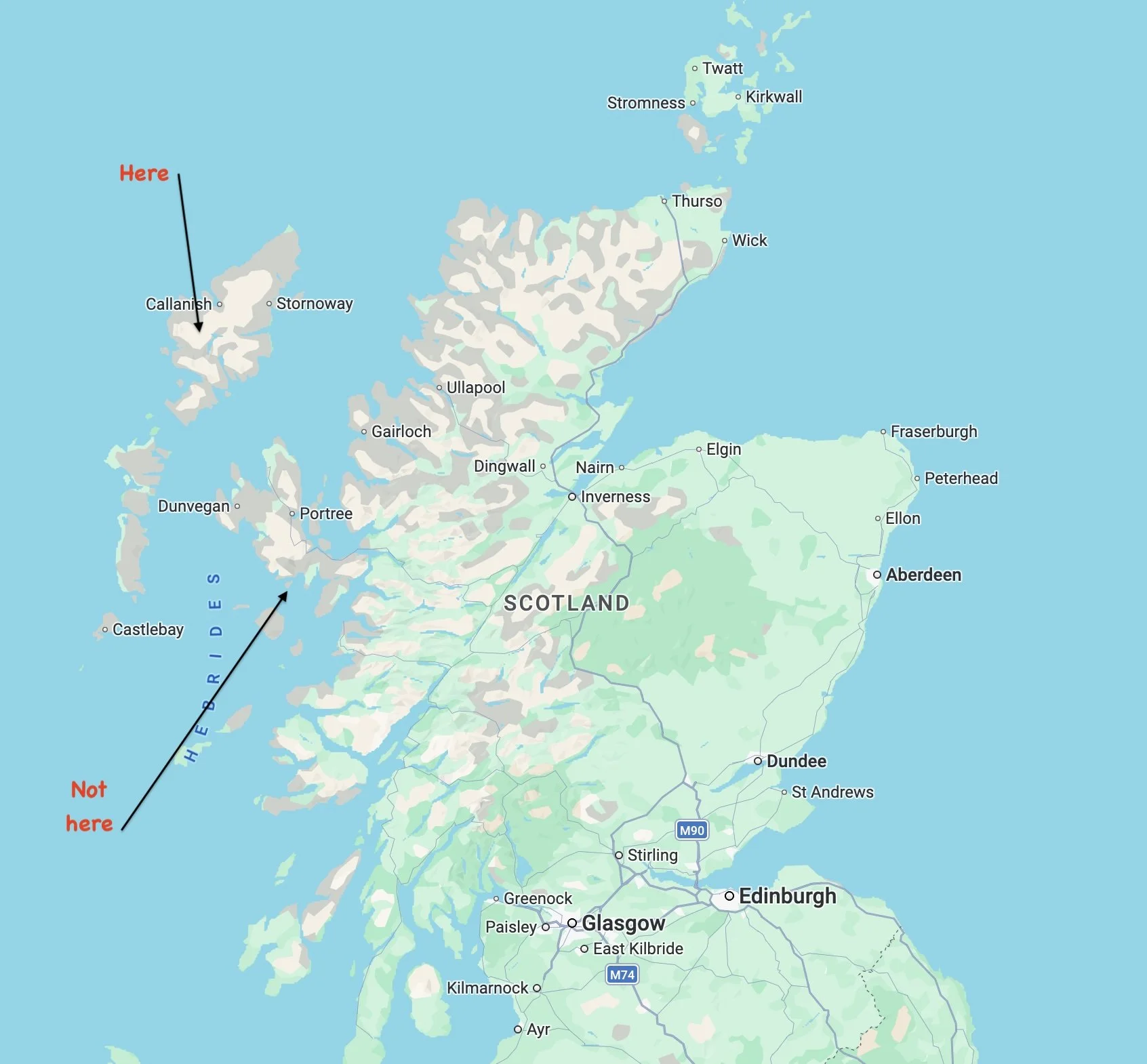
This may seem extreme. It was. It was also necessary.
Yes - in Edinburgh we did end up having lunch with an old college classmate of Vijay’s, but once we were out there… we were OUT THERE.
And we loved it.
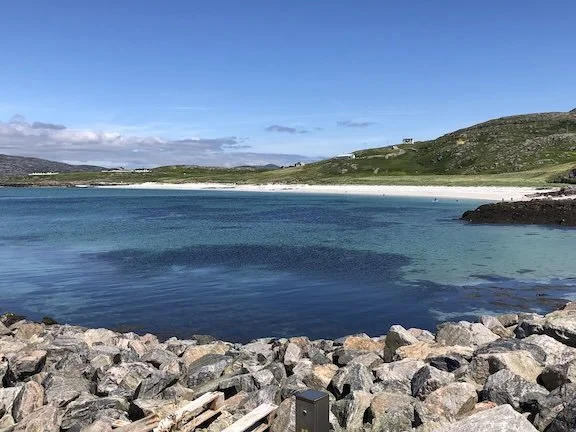
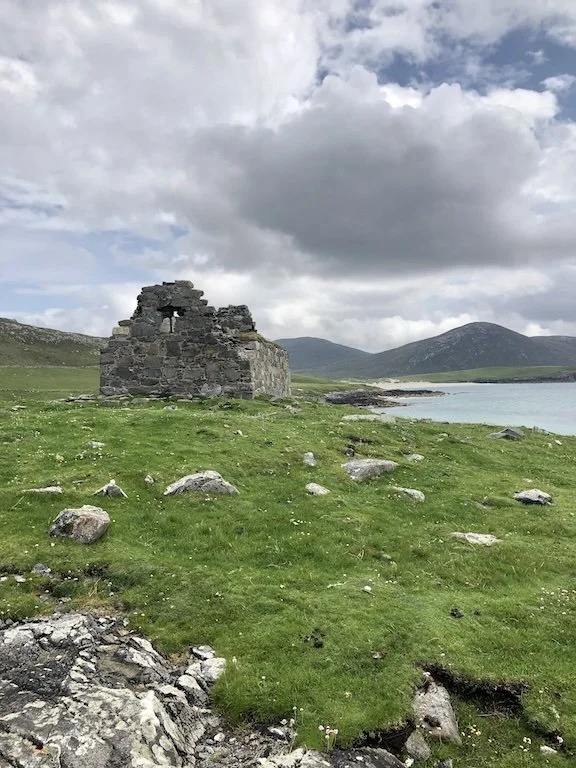
It turns out that the Outer Hebrides is the vacation destination of my dreams. Not only because my husband didn’t know anybody there (although he certainly does now!), but because it’s unconscionably beautiful, craggy, watery, windswept, dramatic - and downright chilly. It also rains quite a bit (love that!)… and wherever you go, there’s almost nobody there.

To get from one island to another, sometimes there’s a skinny little roadway/bridge type thing… sometimes there isn’t and you have to take a boat. Some of the “bigger” towns have a pub and a grocery store - most do not. Other than in the main town, Stornoway (pop. 7K), there were almost zero hotels anywhere, certainly no AirBnB’s, no booking anything online.
I had to CALL various bed and breakfasts on the phone (imagine). Maybe they answered, maybe they didn’t. Answering machines seemed to be a cutting edge technology that everyone had agreed was not worth the trouble.

My long-suffering husband.
He is indifferent to sheep, and prefers warm weather.
In short, between the planes, boats and automobiles required to get there and the additional major to minor inconveniences sprinkled throughout, there is not a whole lot of tourism going down in the Outer Hebrides… which of course suited me just fine. There are, however, many random, unexpected discoveries that delighted both of us at every turn.
Harris Tweed was one of these.
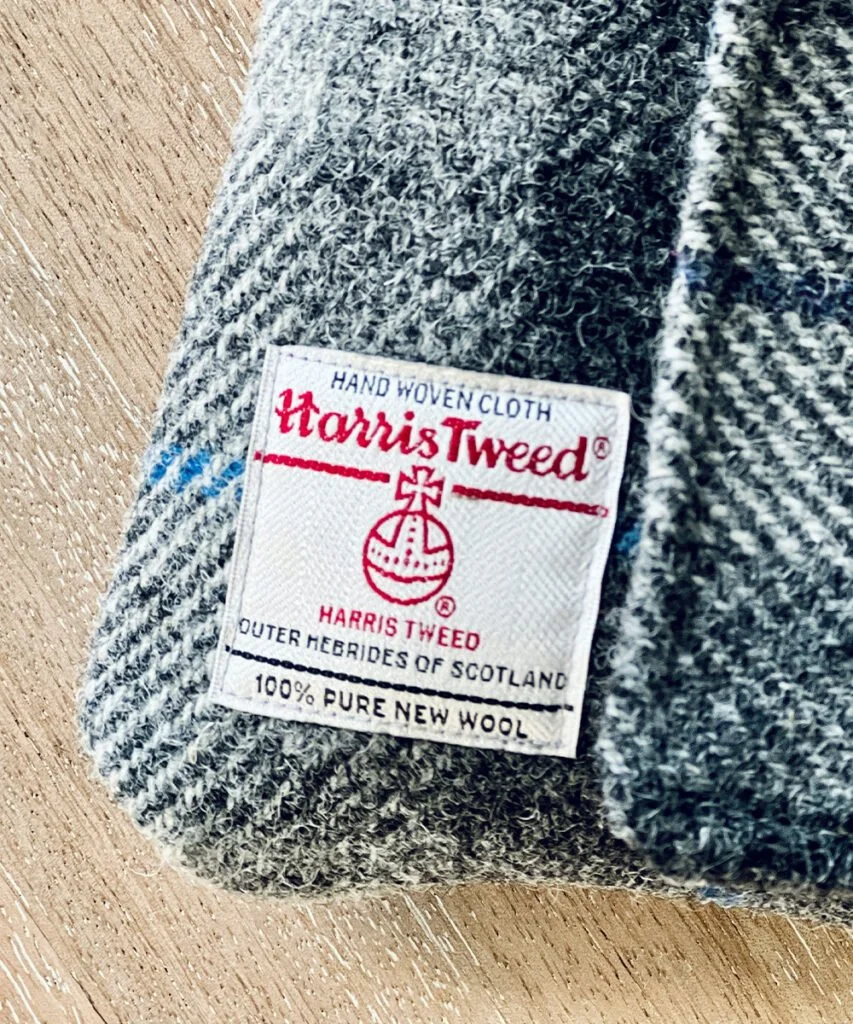
Harris Tweed is something that everyone from a certain generation has heard of - and almost no one can tell you why. My theory is that it harkens back to the days when we all still greatly admired the British aristocracy and were taking major cues from London when it came to symbols of a high-flying lifestyle. Humble, practical, durable tweed became synonymous with luxury as early the 19th century, when it was used for shooting jackets of the nobility and landed gentry. Then Chanel and other fashion labels revived it in the 1950’s, cementing its place in the realm of high-end product. It didn’t hurt that there was a literal royal decree - the Harris Tweed Act of 1993 - that prevented any fabric from being called Harris Tweed or using the famous Harris Tweed Orb logo unless it is produced in the Outer Hebrides, by hand.
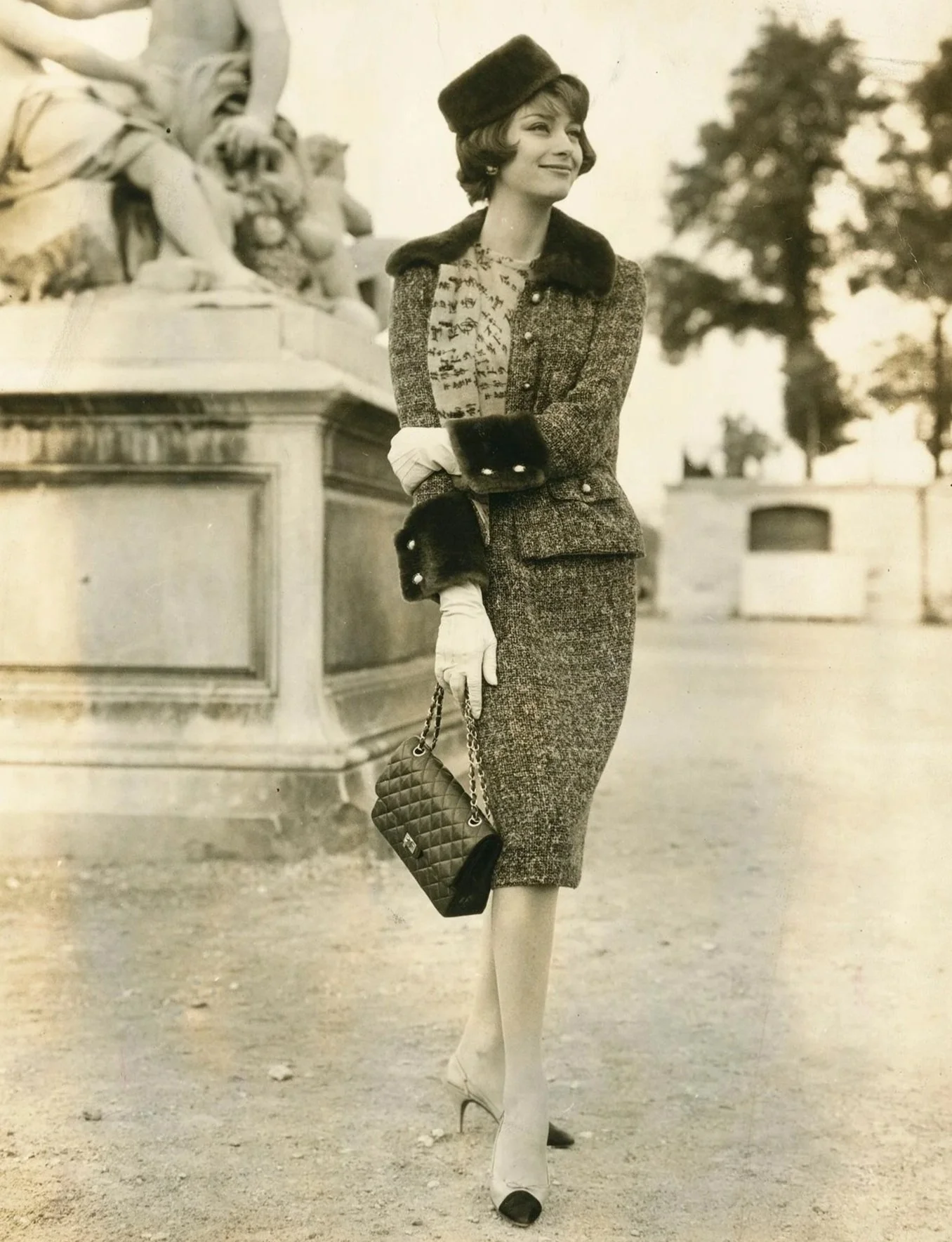
We all have Coco Chanel - and somehow the Queen of England - to thank for the survival of Harris Tweed…
But I’m getting ahead of myself. Even though I assumed (as one would) that Harris Tweed was made somewhere on the Isle of Harris, I wasn’t sure where to go to get to the source. There seemed to be several different tweed mills on Harris and Lewis - all with different names. (The Isle of Lewis is more or less contiguous with the Isle of Harris - I could not tell you why they are considered separate. Just another mystery of the isles). Things got weirder when I asked our B&B hosts (the ones who answered the phone) and they said, “Oh, you should go see Rebecca Taub - she makes it in her backyard.”
Huh?
They explained that ALL Harris tweed is woven by individuals in their homes (or backyard workshops) and finished at various central facilities that distribute it. I wasn’t entirely sure I believed them. They proceeded to call Rebecca on the phone (who answered, mercifully) and told her we were coming.
(They also hooked us up to attend that day’s Sheep Dog Trials, which was utterly life-changing for both of us… but sadly must be a post for another day.)
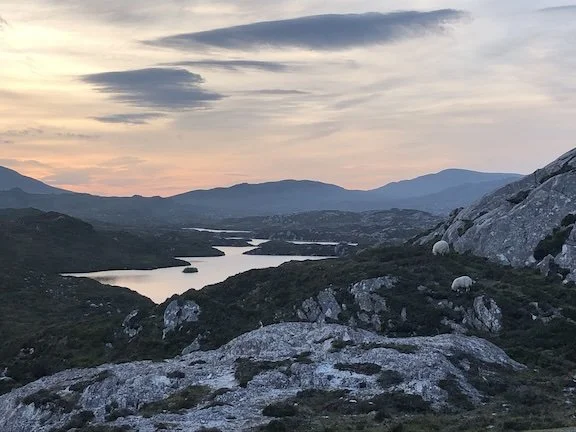
We followed their (written) directions, stopping so often for vistas of the delightfully craggy landscape that it took us a while to get anywhere.
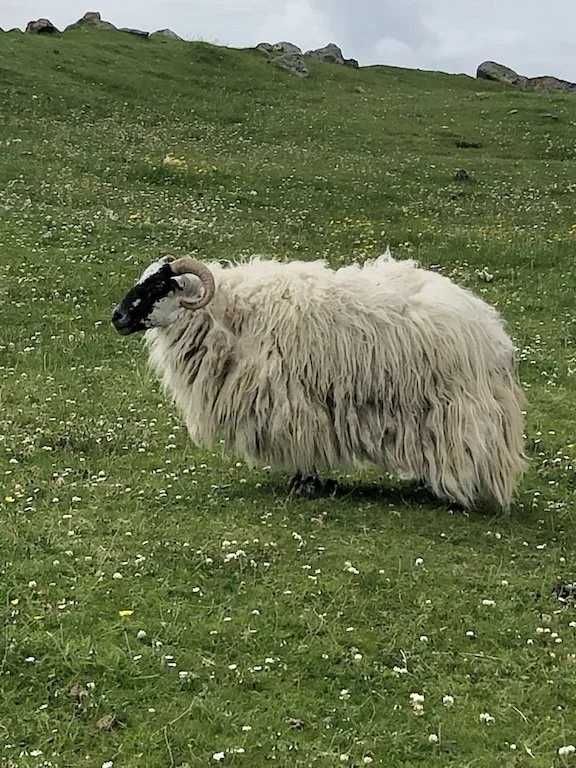
We also stopped frequently for sheep who clearly felt entitled to use the road for naps. They were everywhere, and they seemed super-sized.
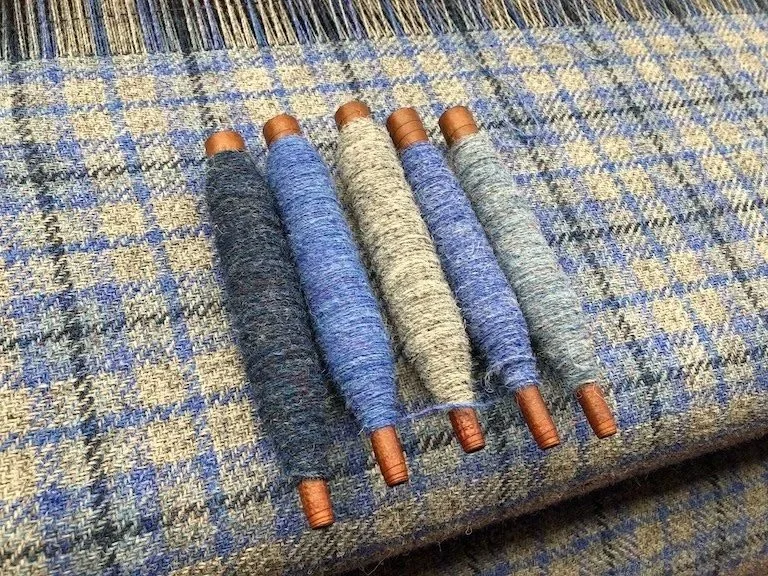
When we showed up at Rebecca’s, she greeted us at her backyard studio which is dominated by an enormous loom dressed with her current tweed project. She gave us a demonstration, and sold me a few yards of Harris Tweed she had woven herself. Here is a short video of her weaving:
Here is a closer look at the tweed she was working on, with all the different yarn colors:
Here she is with her darling brother. I am holding the tweed I bought:
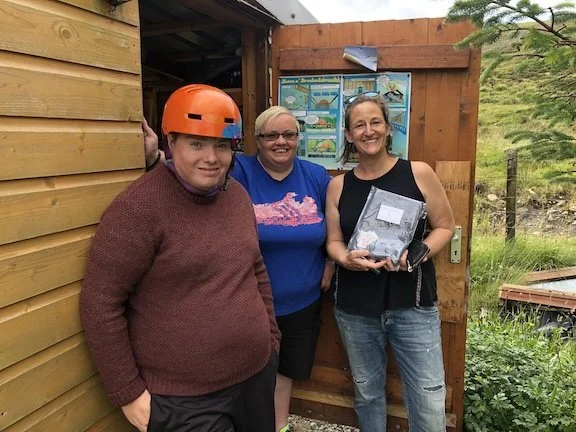
There are dozens of weavers like Rebecca on the island. Some of these people have been weaving for decades… it runs in many of their families. They most often divide their time between weaving and a day job, to make ends meet. Some of them graciously receive visitors. Every yard of Harris Tweed is woven by them. Without exception.
But they are only part of a multi-step process. The Taubs sent us off to the Carloway Mill to get the rest of the story.
Carloway is on the west coast of Lewis. The mill offers visitor tours given by whatever mill personnel is available, and we ended up on a tour with a group of French people led by a gentleman who operates a variety of machinery there and whose name I cannot remember. He had a very thick, very lovely Scottish accent that I’m sure was confounding the poor French people but which I could not get enough of.
Anyway… the mill is involved at both the beginning and the end of the production process, as follows:
Sheep get shorn, and wool of all types gets sold to the Carloway mill (as well as a couple others on the island - there are 3 mills in total that process Harris Tweed). The wool gets washed and then dyed in giant vats in a number of bright colors to spec. Here are the color references for dyeing:
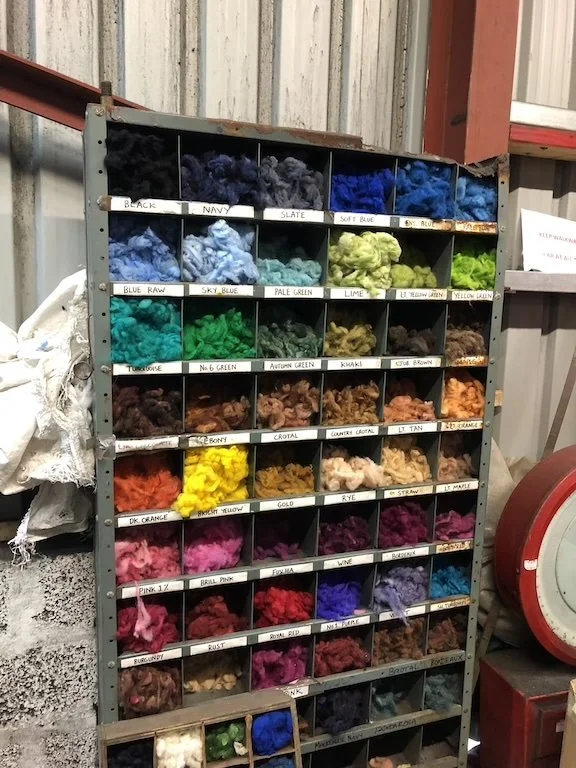
This is where things get interesting.
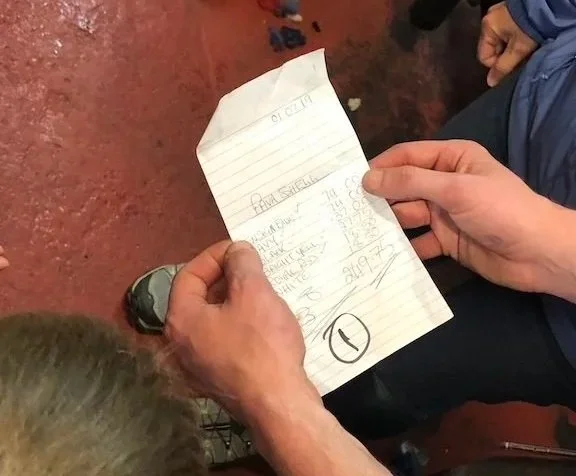
According to a “recipe” (scrawled on the piece of paper below), precise weights of the different colored wools are put into an enclosed chamber where they are essentially blown to bits and mixed about in the air by some very powerful blowers. This is the wooly equivalent to a paint mixer at the hardware store, trying to achieve a very specific color.
Here are what the dyed bits of wool look like after the mixing process:
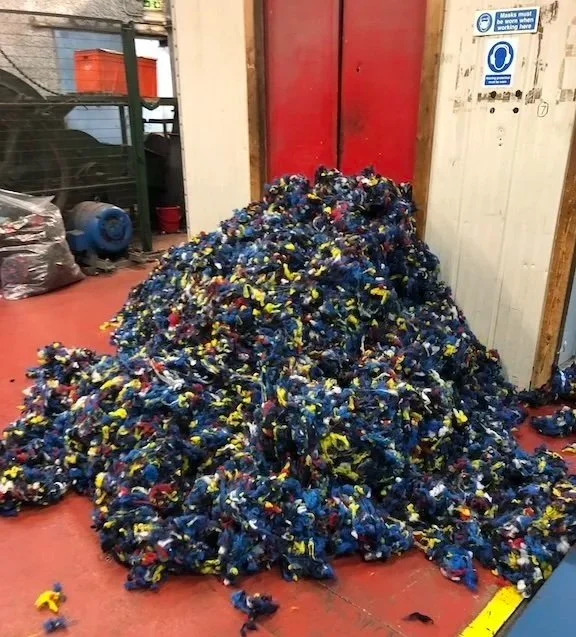
So rather than spinning the wool and then dyeing the yarn, Harris tweed yarns are made of pre-dyed wool that is then combined to form a color. This accounts for the richness and depth of their colors, along with the glorious variegation that gives them much of their character.
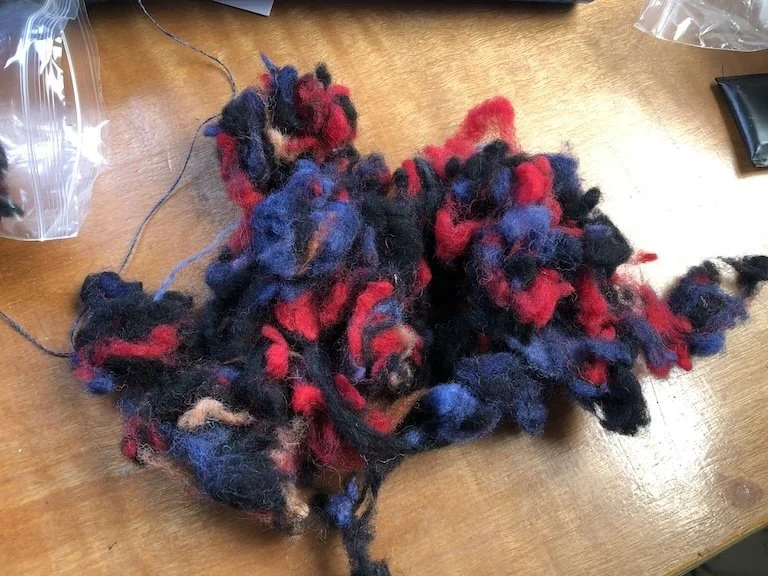
So this combination of wool…
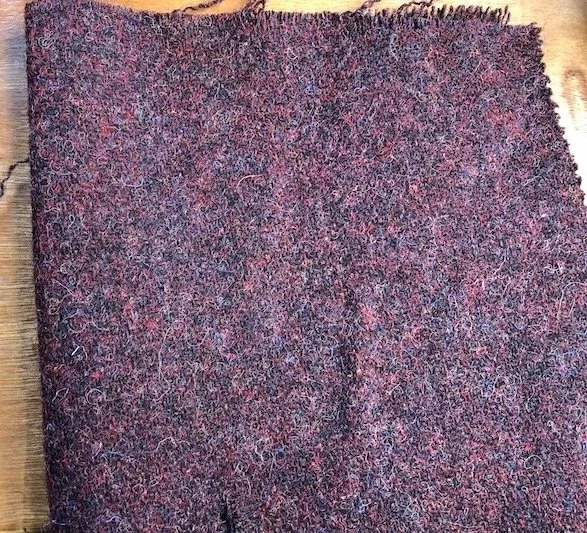
…ends up looking like this (in a tweed made of only that yarn).
The wool then goes through the carding machine, where it gets mixed even more and the fibers are evened out, separated, and lined up for spinning:
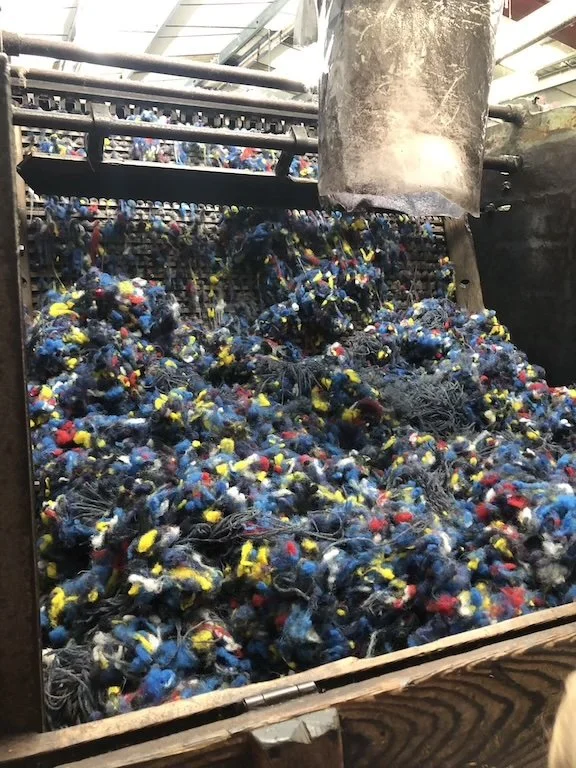
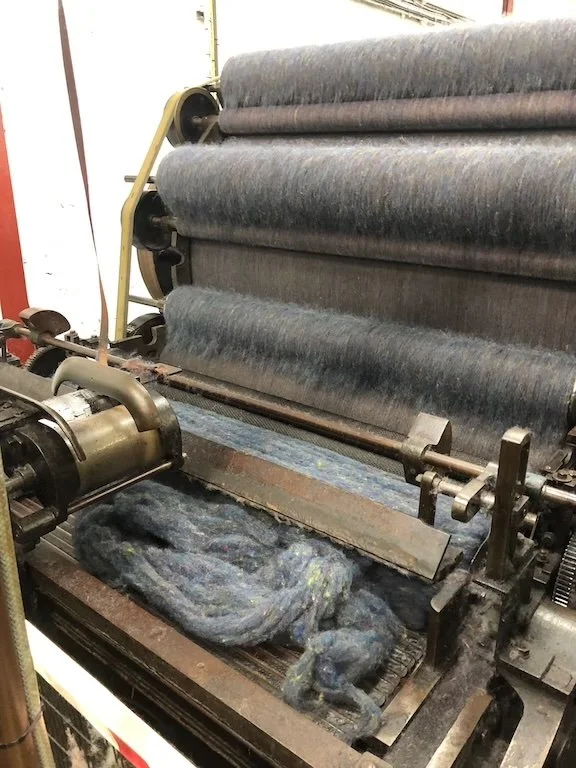
More carding… the carding machine is practically the length of the factory, and the wool works its way through a number of stages in this machine…
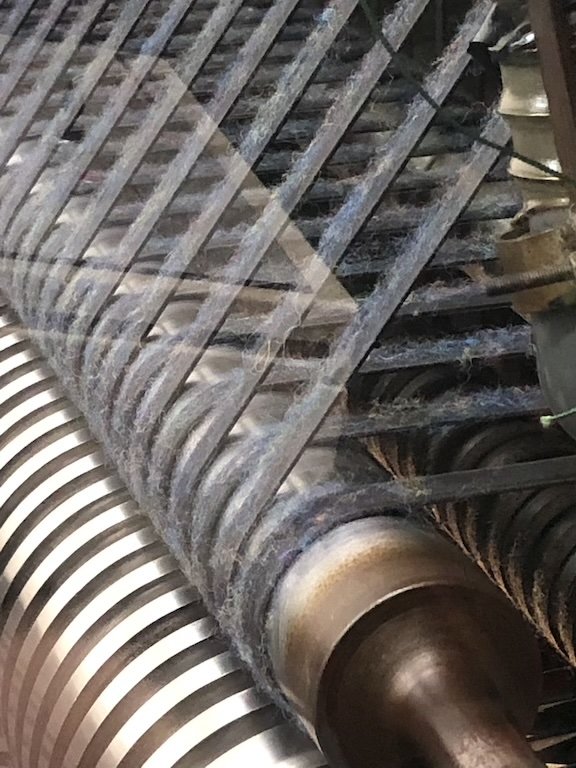
… including separating it into embryonic strips of wool that will eventually be spun into yarn.
Spinning. It’s worth noting that all of these machines are original - built in 1892 - and still going strong (!)
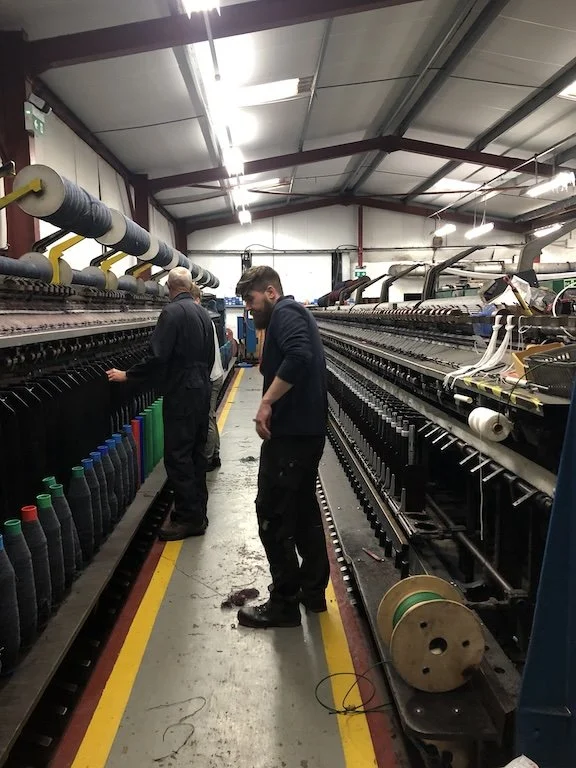
Once spun, the yarn is then brought together into a long warp, in a very specific order based on whatever pattern is meant to be woven. This is done by another very old machine, with a highly skilled professional setting it all up, then attending to it carefully to make sure yarns aren’t crossing or breaking:
The finished warp is delivered with prescribed weft yarns to the home of one of the many island weavers like Rebecca, who will weave the pattern to spec.
Then they send it BACK to the mill, where the entire thing gets checked for flaws (and darned, if necessary), washed and finished - which involves steaming, pressing and shaving. Here’s our man explaining the shaving (and delighting me with his glorious accent):
Only after all this does it get stamped with the coveted Harris Tweed “orb” trademark.
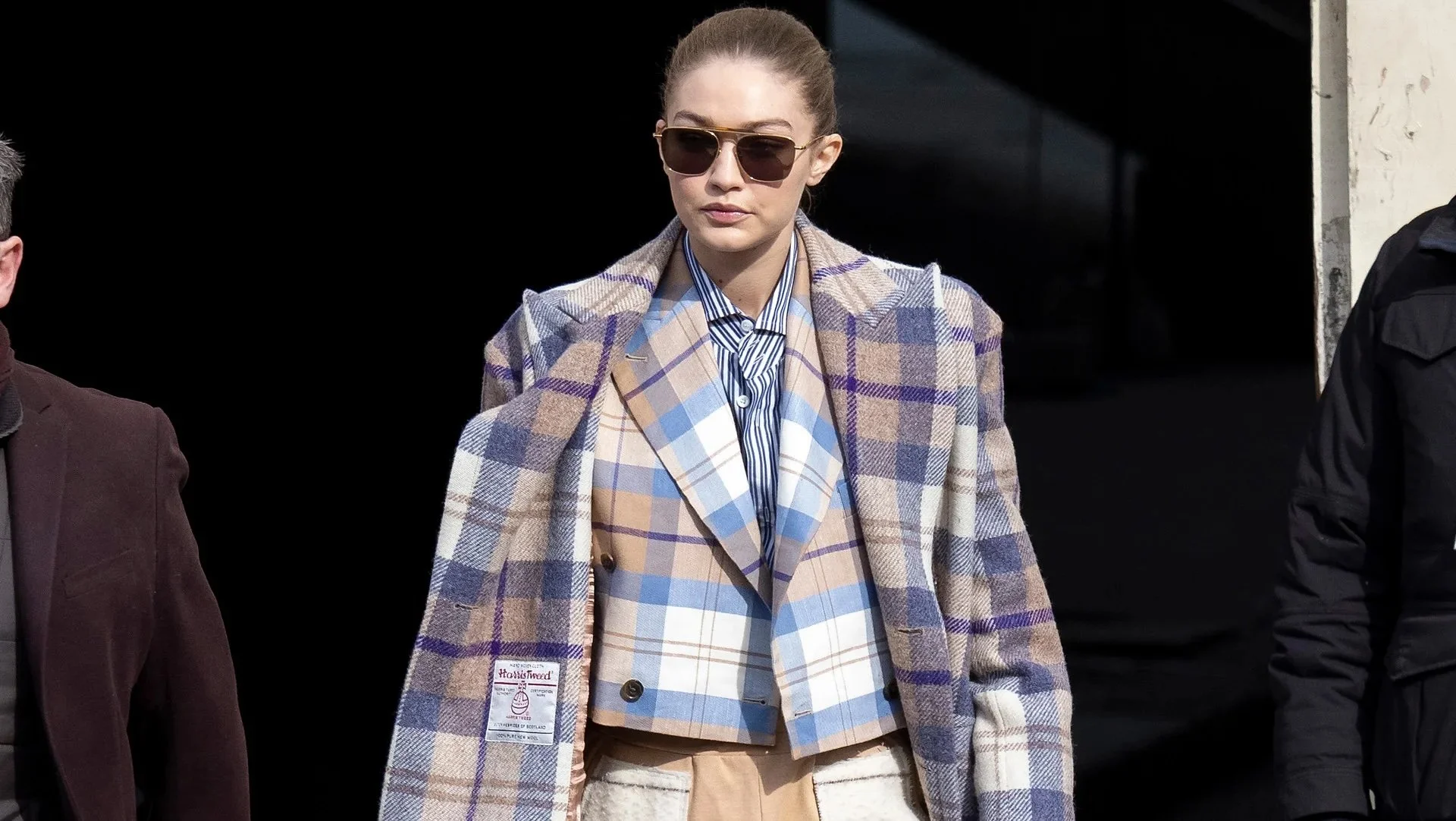
Gigi - flashing the orb. Credit: Getty Images
The whole process is such a unique mix of handwork and machinery… I didn’t know what to make of it, but I remain enthralled to this day.
Of course it is no accident that all of this happens in a place that is so far removed from the rest of the world that is still relatively untouched by so many aspects of modern life. By now, they probably all have wifi and maybe you can book a place online… but the people on these remote islands have still managed to maintain core traditions of island life there that are important to them. In the case of Harris Tweed, sheep farming, crofting and weaving were combined more than a hundred years ago into this hybrid industry that is integral to the local economy. It has been able to survive largely because it was validated in the public eye by influential design houses as a desirable, luxury item - AND it received government protection.
I’m not sure the second would have happened without the first, but it’s clear that both have been critical to allowing this artisan tradition to continue to thrive. It has even found a new, younger customer base through collaborations with luxury fashion houses and streetwear brands.
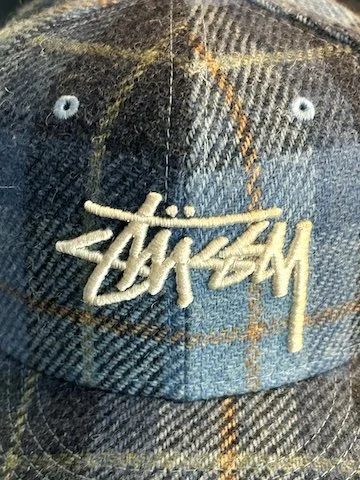
As we look for ways to support artisans and artisan product, the case of Harris Tweed seems instructive. Designers and fashion houses already have enormous influence over what the public considers “luxury.” The more they incorporate into their products - and highlight - specific materials or pieces like Harris Tweed that are crafted by hand, the more awareness they raise, not just about specific artisan traditions but about the notion that “luxury” doesn’t just mean expensive. It means someone made this product using time-honored techniques that go back centuries… and that’s something worth paying for.
That kind of promotion and awareness, in combination with government protections like those accorded to Harris Tweed, could go a long way towards keeping some of these artisan traditions (not to mention their communities) alive and well.