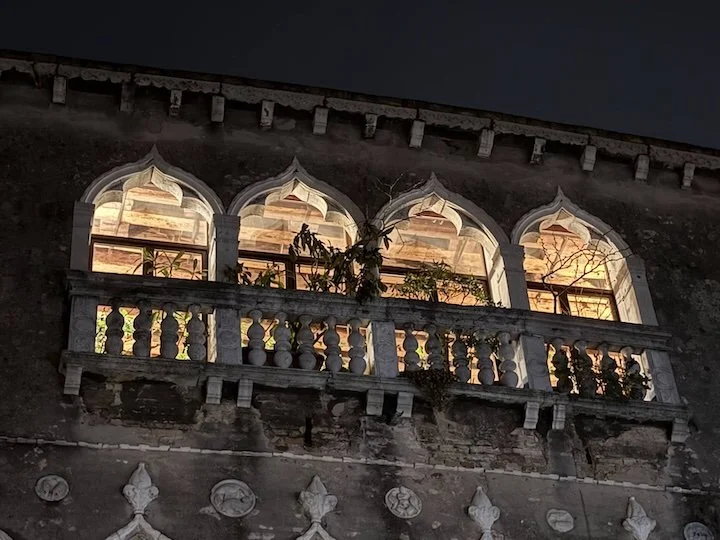
Fortuny
Venice, February 2025
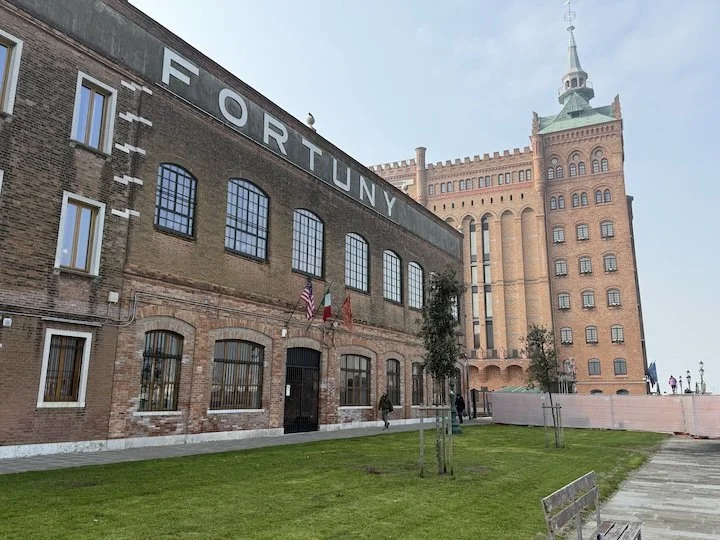
Fortuny factory on Giudeca
Venice was one of the places on our “must go” list for European travel while we lived in Paris. This was my husband’s pick. I had already been there (although so long ago it hardly counts), but Vijay had not, and he dislikes having such an obvious hole in his travel game. So even though we were deathly afraid of the much-documented tourism crush, we planned a weekend stop there on our way to visit friends in Rome.
I did not have high hopes. Honestly, I’ve gotten to be so crowd-averse it’s kind of debilitating when it comes to travel. There’s really nowhere you can go anymore that many, MANY other people don’t want to go also, so you have to just do your best to go off-season, try to stay “off the beaten path”, blah blah blah… and hope… most of which does not usually go all that well.
But Venice? That’s like going straight into the belly of the whale.
Miraculously, things went far better than we dared hope. But we deserve very little credit for this. Most of that goes to a gentleman by the name of Mariano Fortuny y Madrazo.
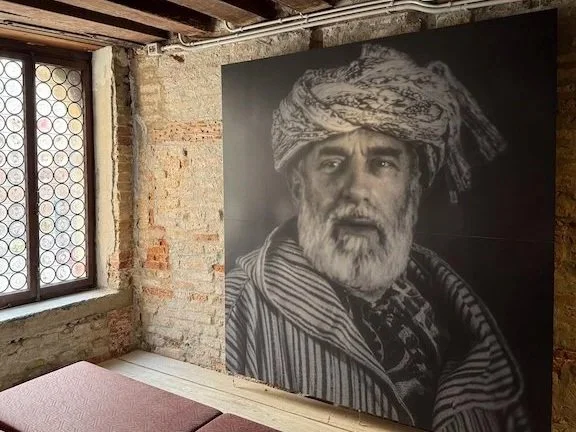
Our first morning in Venice, while walking towards the Piazza San Marco and bracing ourselves for mind-numbing perma-throngs, we noticed a small sign for something called the “Mariano Fortuny Museum.” I forced an immediate detour.
I knew a bit about Fortuny for two reasons: 1. Restoration Hardware used to sell these incredible Fortuny lamps that we were all obsessed with when I worked there, and 2. I had been to the Paris shop, which had all the lamps plus the stunning art deco gowns and insane fabrics… elegant, unique, really unlike anything else. I don’t know why I wasn’t aware of the museum in Venice, but clearly I was meant to show up there.
Vijay does not share in my textile obsessions, but he’s usually game for whatever, god love him. Also, because the museum itself is housed in Fortuny’s original Venice home and workshop, it gave us the opportunity to go inside one of these fabulous palazzos rather than walk past and wonder. And there was no line. Worth the price of admission in itself.
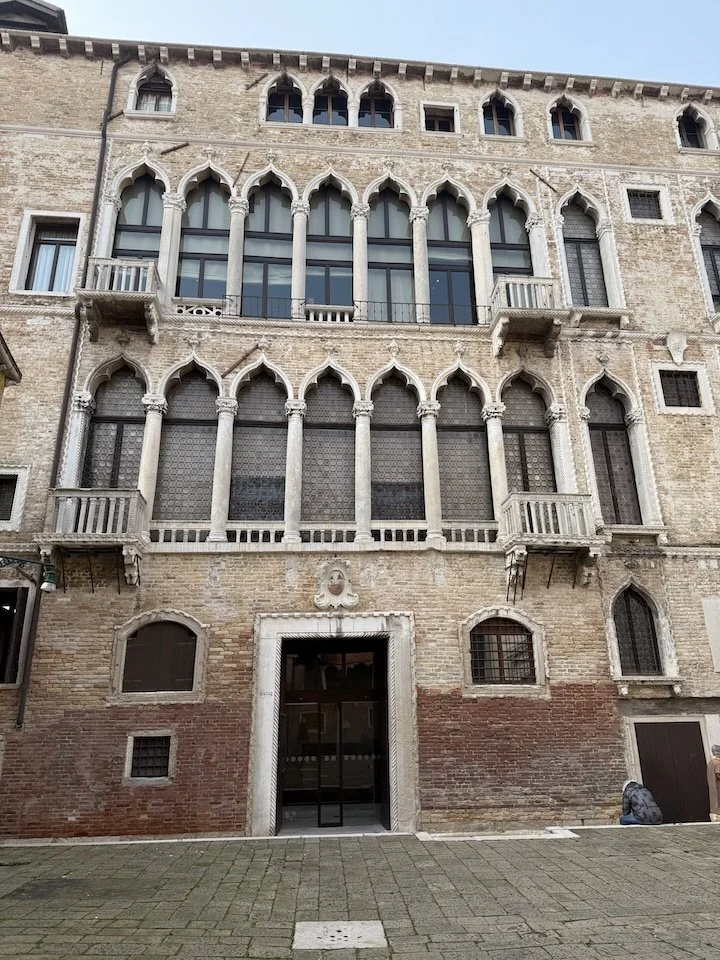
The Mariano Fortuny Museum in the Palazzo Pesaro degli Orfei (circa 1450!)
It turns out that Mariano Fortuny was more than we bargained for.
FAR more than a textile and fashion designer, he was one of those “everything" characters, an accomplished artist and inventor whose innovations and designs spanned multiple fields of interest and disciplines. Sort of the Leonardo da Vinci of his day.
Born in Granada, Spain in 1871 to a renowned Spanish painter (also Mariano Fortuny), the boy was four when his father died and his mother (the daughter of the director of the Prado) moved the family to Paris, and then Venice.
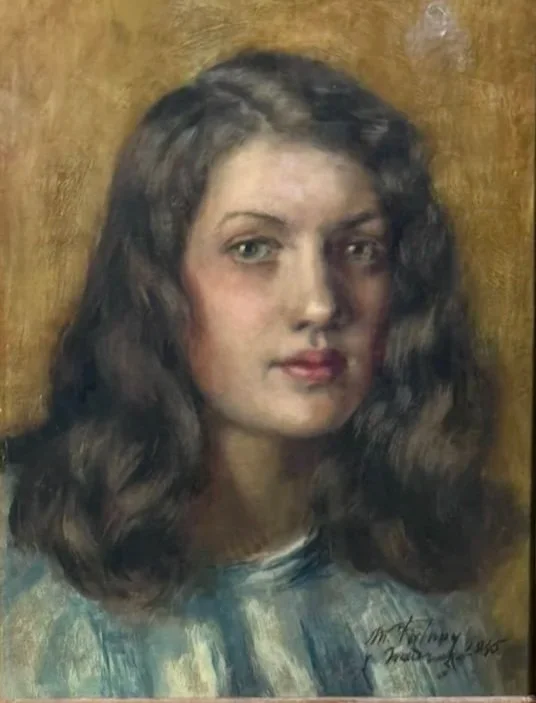
Mariano was raised in a very artistic and intellectual household, and started out quite the accomplished artist, like his father before him.
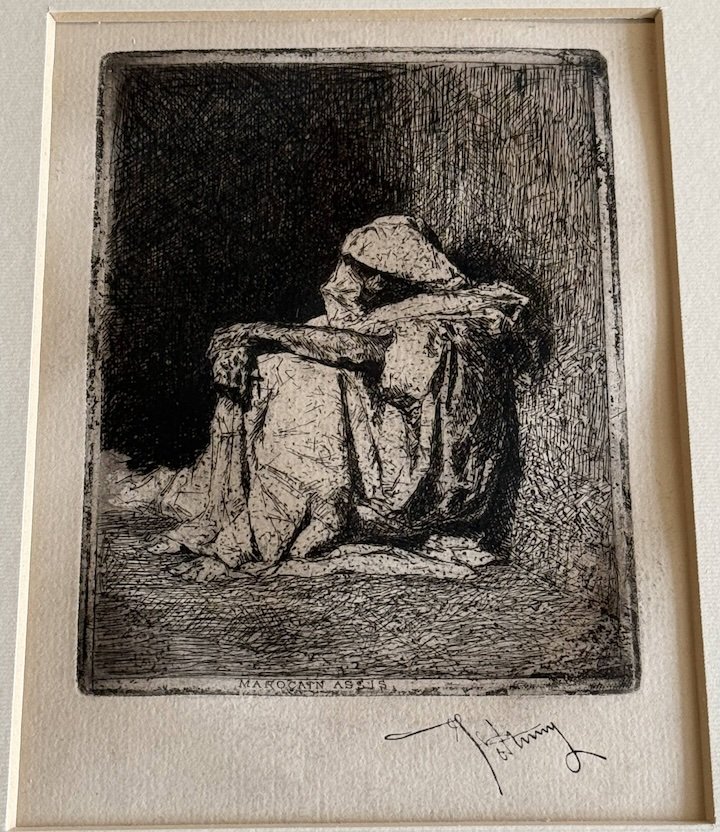
Although Fortuny barely knew his father, they ended up having quite a bit in common: their painting practices, their studies of light, their efforts in multiple artistic fields, a passion for travel, Orientalism and the wider world. Fortuny came up in a time of dizzying innovation, in cosmopolitan cities and surrounded by the type of stimulating people that fueled his diverse interests. He indulged in every one of these interests to the fullest extent of his energy…
…which was evidently limitless.
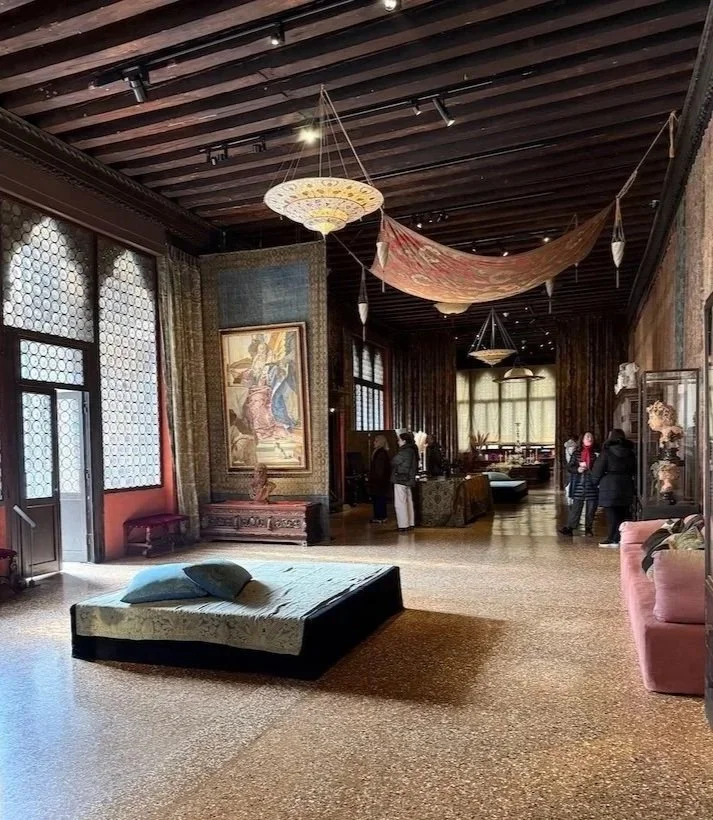
Almost everything he did was first workshopped in his enormous, light-filled studio in the palazzo.
Early on, he was especially taken with the world of theater. In the spirit of remarkable innovations in lighting around that time, he strove to create a luminous atmosphere in theaters to replace the traditional painted backdrops that unconvincingly simulated the outdoors and natural light. Tinkering around in the attic of the palazzo and conducting various experiments over a period of years, he eventually came up with what is known as the “Fortuny System.”
The system features the “Fortuny Dome” - an enormous iron and cloth dome that basically surrounds an entire stage/scene, acting as a huge - but realistically diffuse - spotlight. Along with an indirect lighting network made with arc lamps and sophisticated lighting devices in colored silk satin and mirrors, this system ended up being adopted during the first half of the twentieth century by the main theaters of Europe - the La Scala Theater in Milan included.
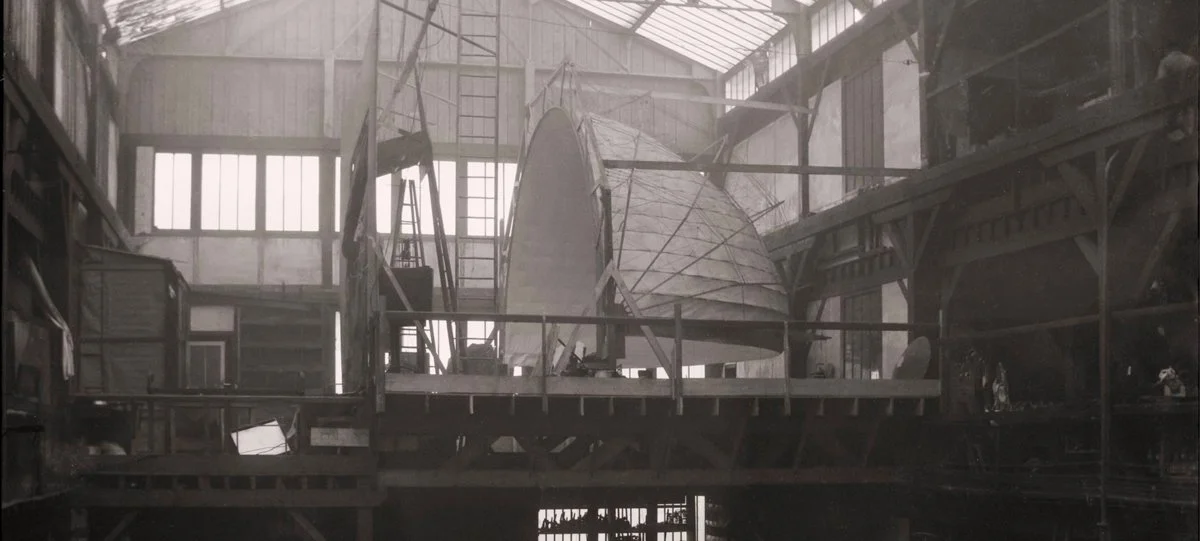
One of the original domes being constructed
Years later, in the 1920’s, “Fortuny Diffusing Lamps” featuring indirect lighting based on this same theatrical lighting were mass-produced for interior design by the Leonardo da Vinci company in Milan. These are the precursors to the lamps that we admired at RH.
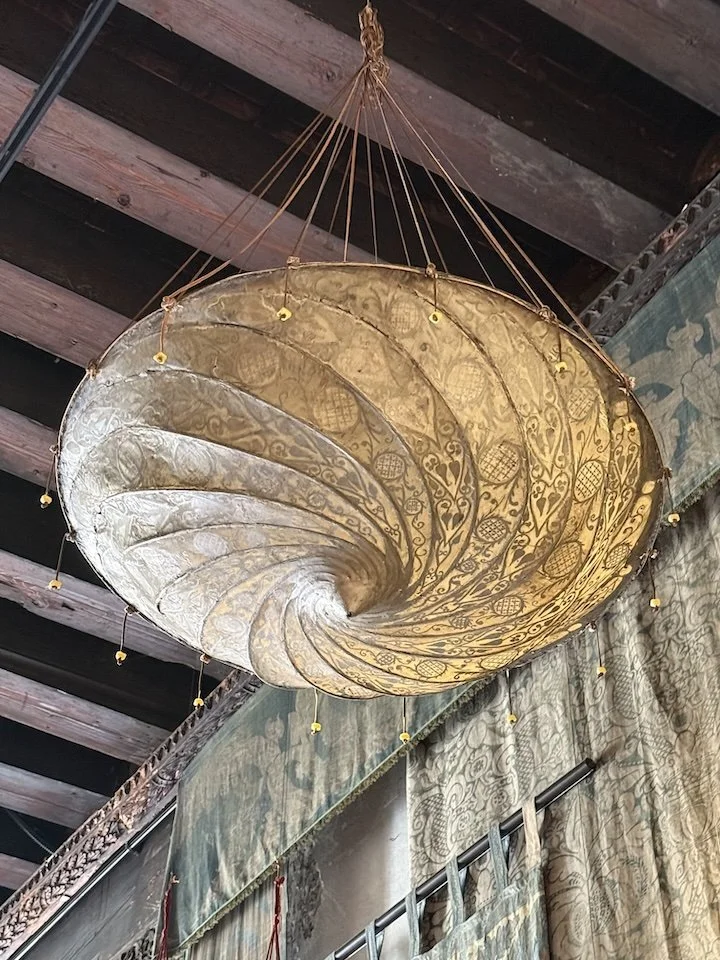
A prototype hanging in the workshop
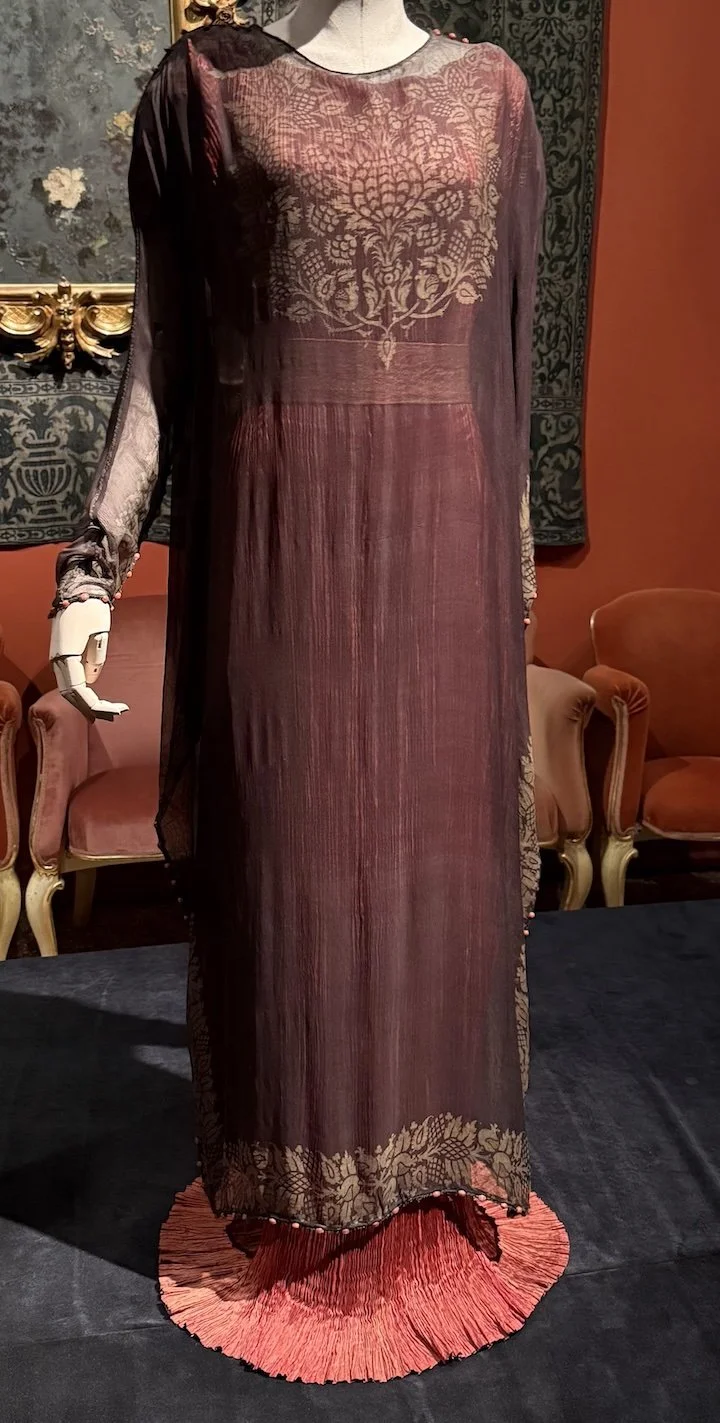
In Paris, Mariano had met his life and creative partner, Henriette Nigrin, and it was with her that his artistic and inventor eye turned towards textiles.
Together, they created the 1907 “Delphos” silk dress that would take the fashion world by storm and make Fortuny internationally famous. Henriette designed the dress, Fortuny a patented method of pleating the silk involving heat, pressure and ceramic rods. It was a closely guarded secret, and has never been replicated (or so claims the museum).
Here, you can see the pleating at the bottom. Most of these dresses came with various overlays to wear with them - some sheer, some in elaborate velvets.
Fortuny and Henriette also co-invented a system of simulating ancient woven fabrics through a special printing technique. This was initially a direct impression process on fabric using wooden matrices, but in 1910 Fortuny patented a way to produce large sheets, akin to the photographic silkscreen process. The new printing matrices could be used in the form of multiple, continuous bands in succession, corresponding to multiple designs and colors, thus activating a modern rotary printing process that was groundbreaking in the complexity of the textiles it produced - and still produces to this day.
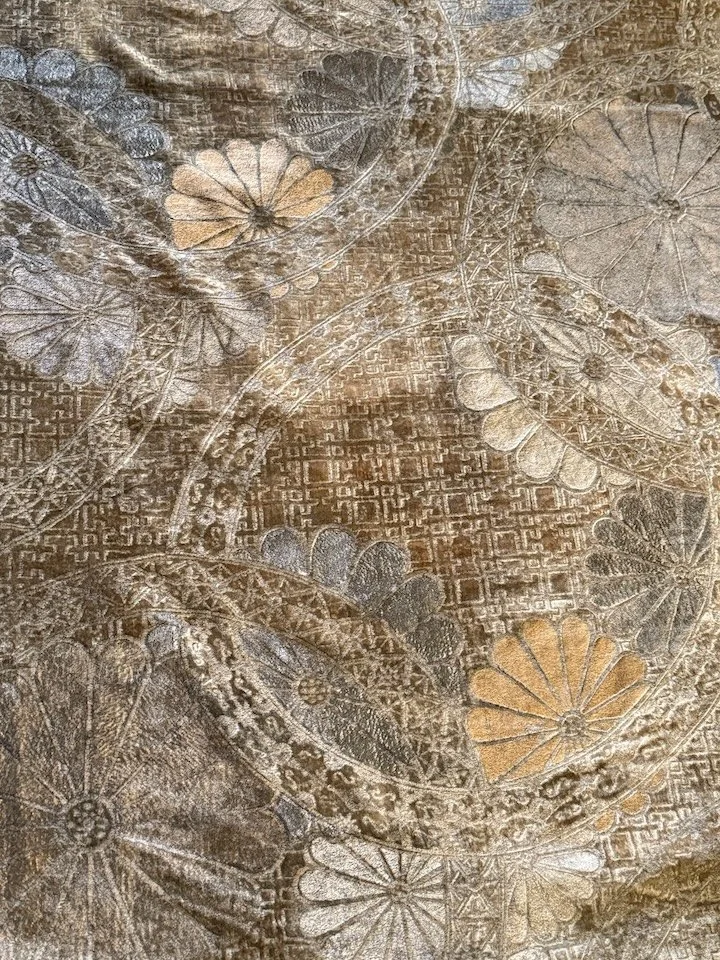
An early, particularly intricate example. Printed velvet.
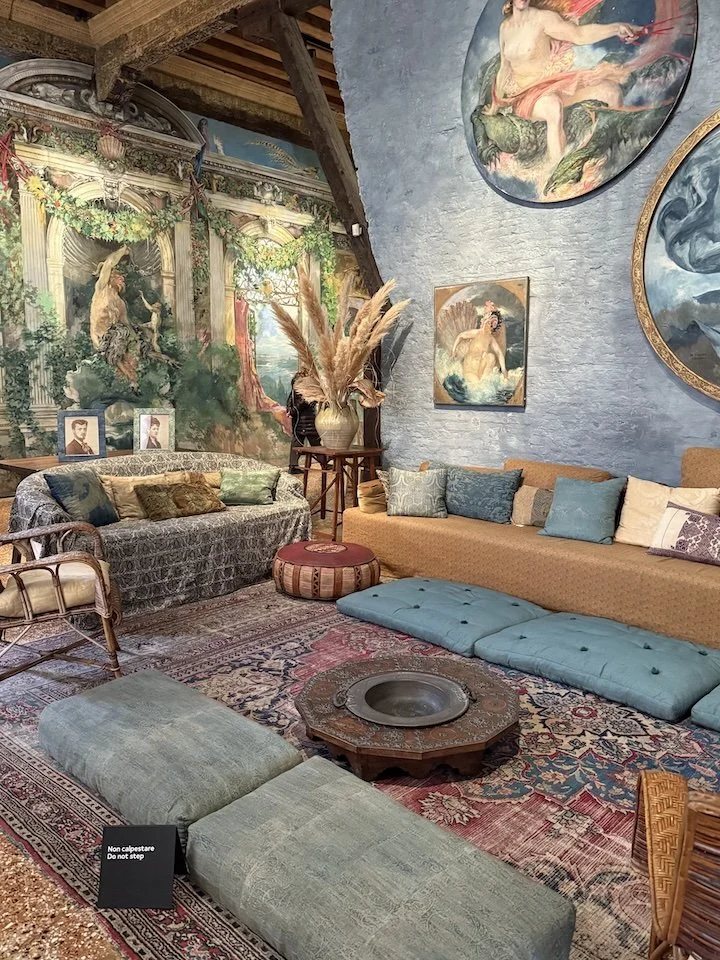
Fortuny’s living room. Just as you might imagine - only more so.
We were quite taken with this man who was so multi-faceted, so talented, so utterly himself in a thousand fascinating ways. Venice became all about Fortuny for us. We decided we had to make a pilgrimage to the factory on the island of Giudecca that Fortuny opened in 1919 (we couldn’t get enough), and we took a water taxi out there the next day.
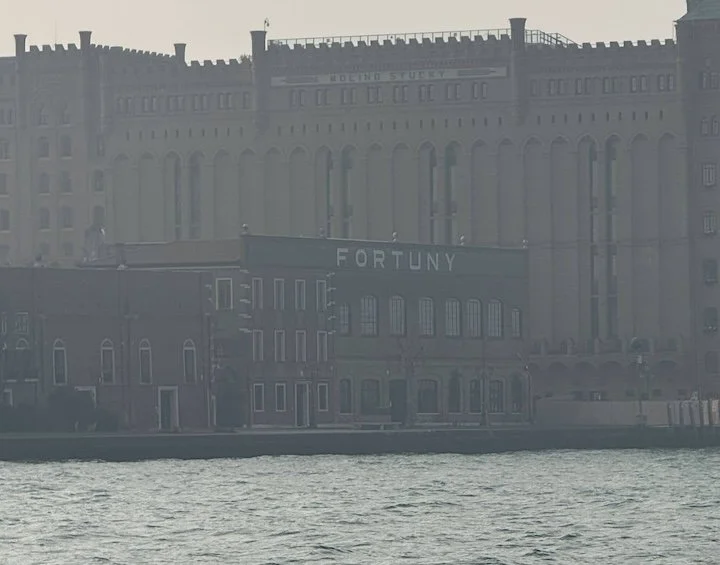
On the approach…
The facility includes the factory and a palatial home attached to it that was occupied over the years by family members and company executives but is now an office/showroom. We presented ourselves to the small fabric showroom on the ground floor and met Antonio - a manager there who was at first reluctant to deal with us (they don’t allow random visitors). Once I explained I was a textile professional, he warmed up and gave us a private tour of the grounds and the house, which is properly decked out Fortuny-style.
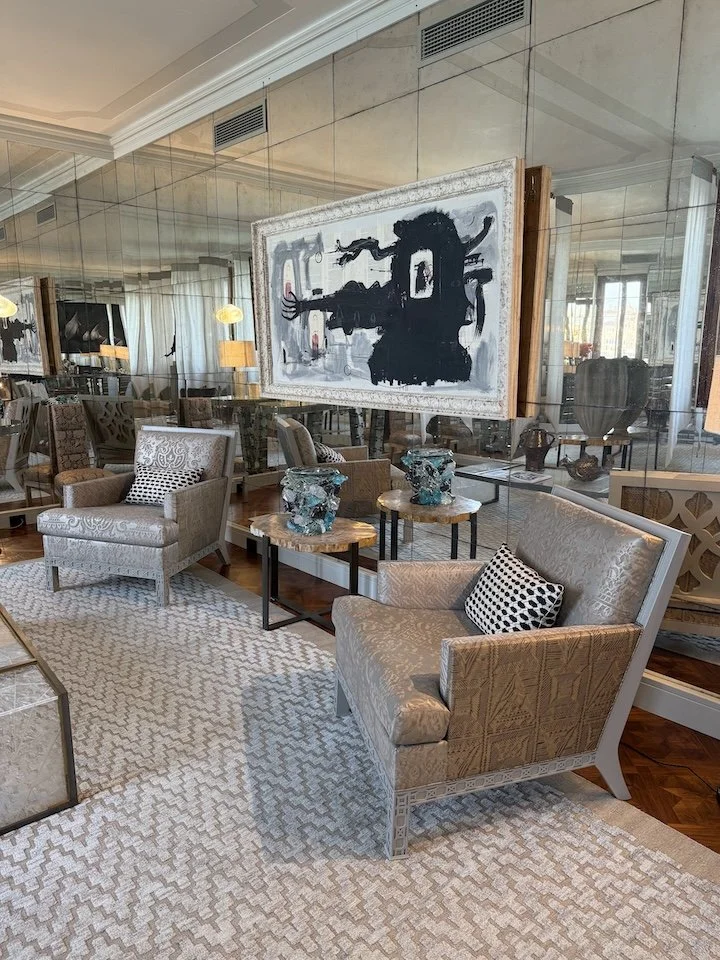
Fabulousness
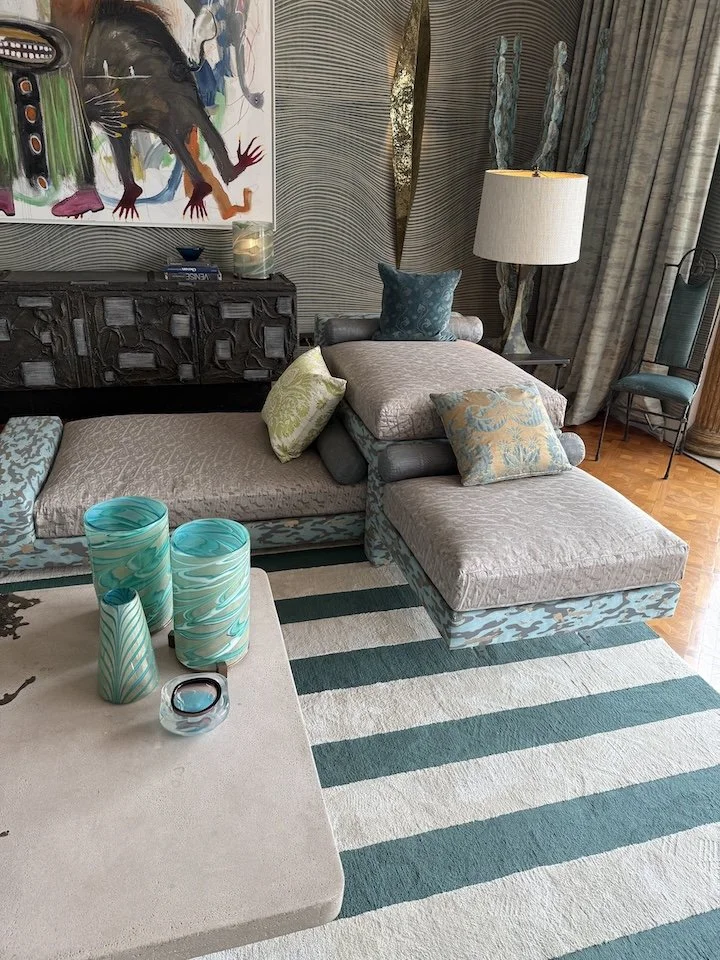
More fabulousness
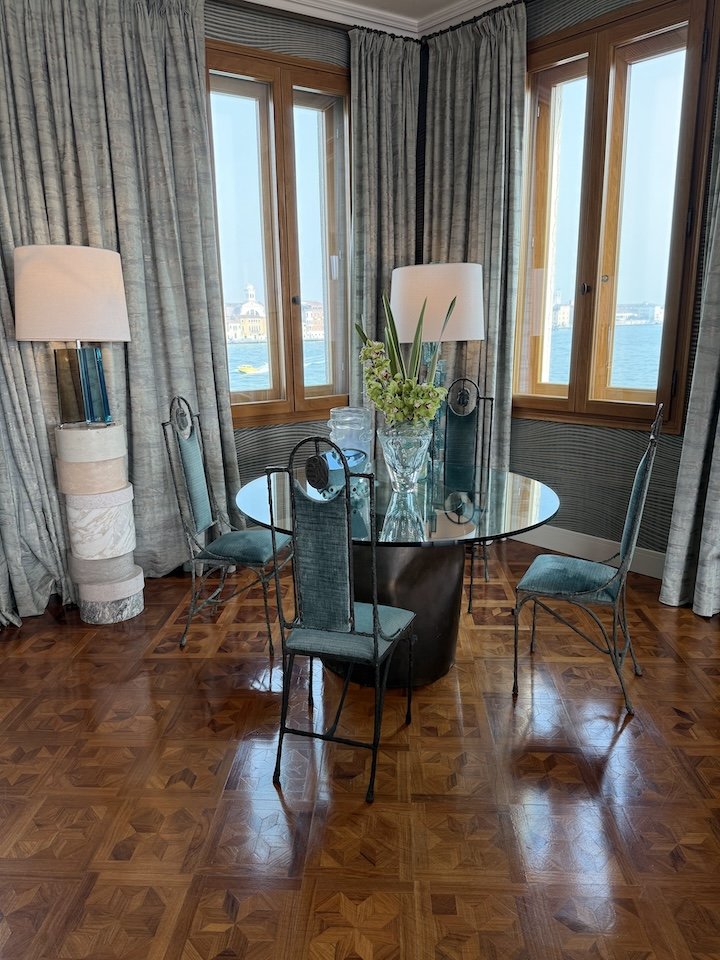
The view from the house (!)
Since the Fortuny fabric printing system is still a closely-guarded secret, no one gets to tour the factory. Antonio himself has not toured the factory, and apparently not one of the workers in the factory have actually seen the entire process: each step is segmented so that they only see the part they work on and nobody witnesses the whole thing start to finish. They take the whole secrecy thing very seriously - apparently, it was specified in Fortuny’s will. It’s pretty intense - but of course this just adds to the mystique.
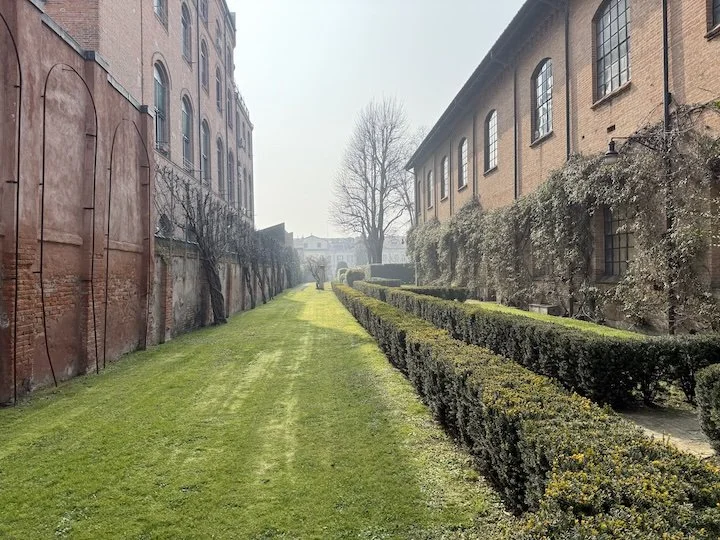
The grounds. Factory is on the right. Avert your eyes…
Antonio was quite lovely, and obviously had tremendous pride in the Fortuny history and product. We got to talking, and ended up having a frank and earnest exchange about what was happening in the U.S., how it was being interpreted abroad, and how we all felt about it. It was heart-warming and heart-breaking at the same time, if that’s possible. Not something - nor someone - we will soon forget.
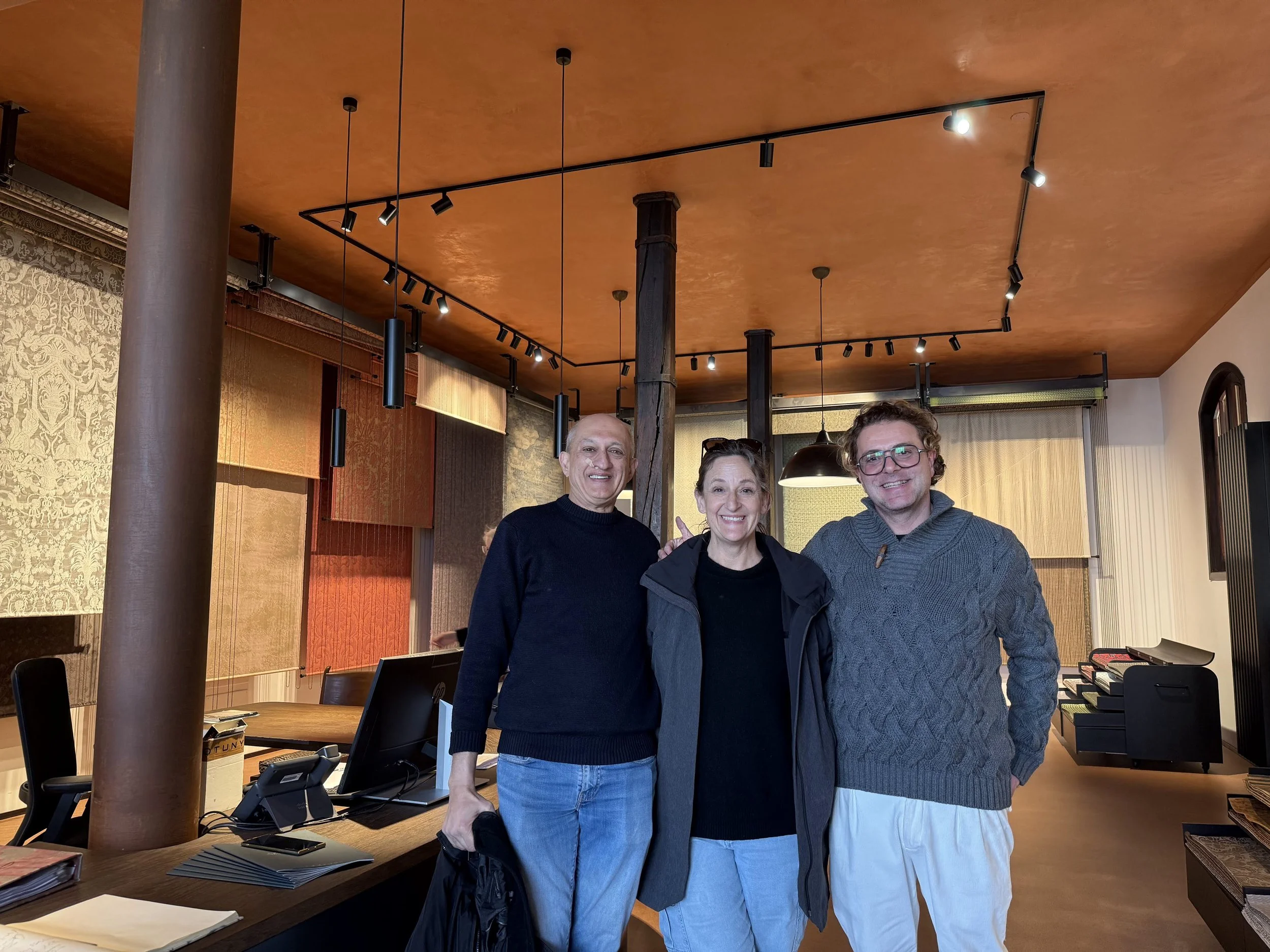
Antonio (on the right) with us in the fabric showroom
When we finally left the factory it was lunchtime, and we didn’t have to walk more than about 200 yards to discover one of the joys of the outer islands - a table right on the canal with an un-impeded view across the water to Venice itself. A far cry from the Piazza San Marco.
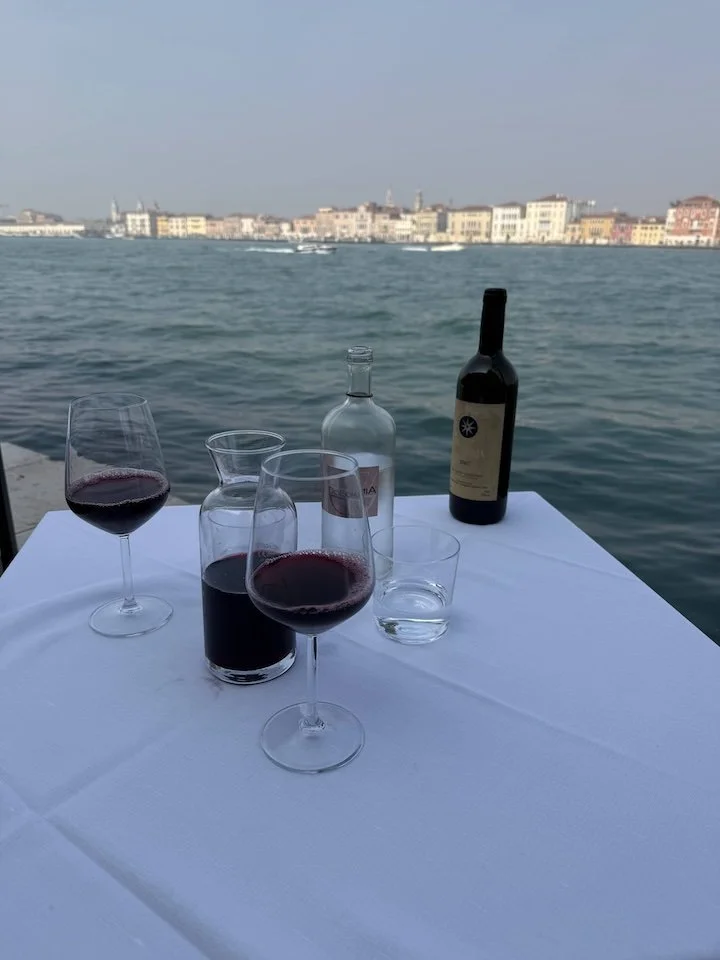
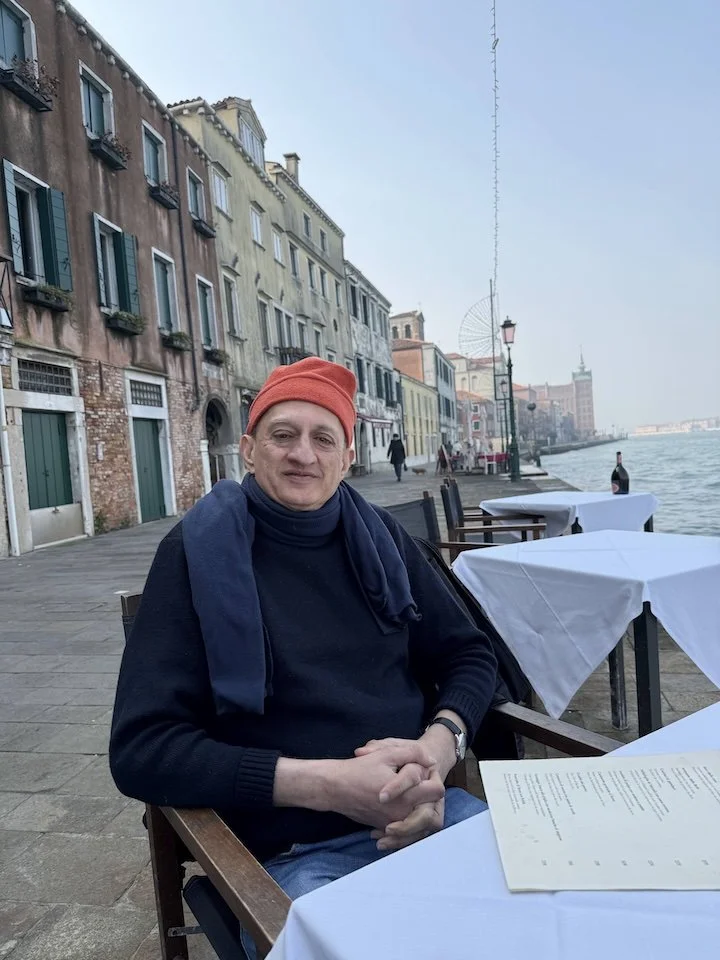
Pleased as punch were we
Venice ended up charming the pants off us, as long as we stuck to the outskirts of town. We felt very lucky that it was not raining, and that we found relatively quiet streets with bars and restaurants full of locals.
We can safely report that all is not lost in Venice - and that it is not yet under water.
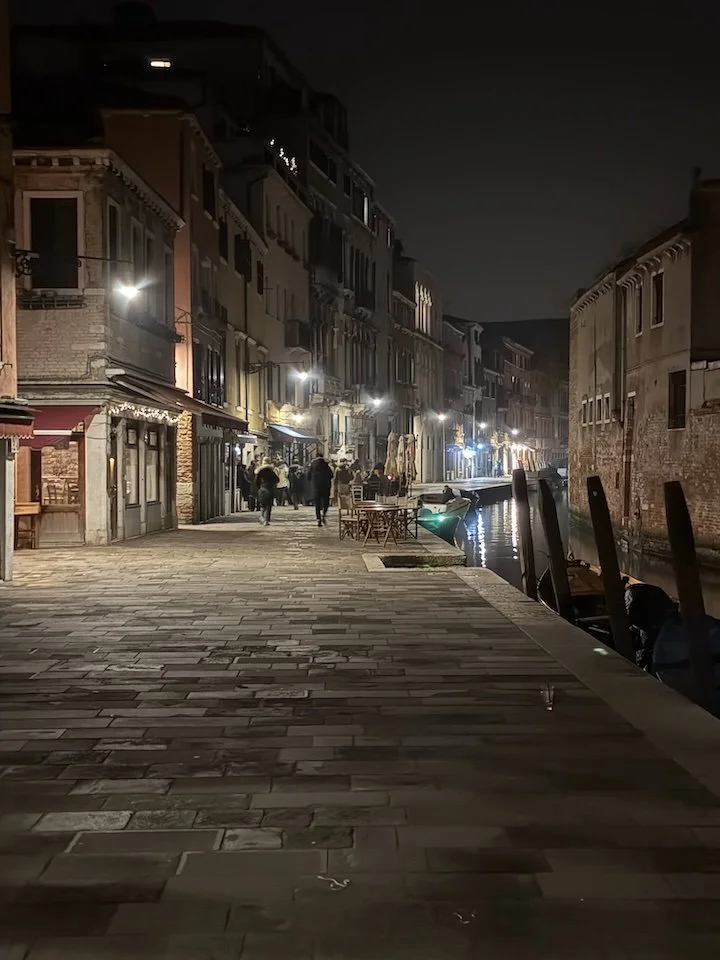
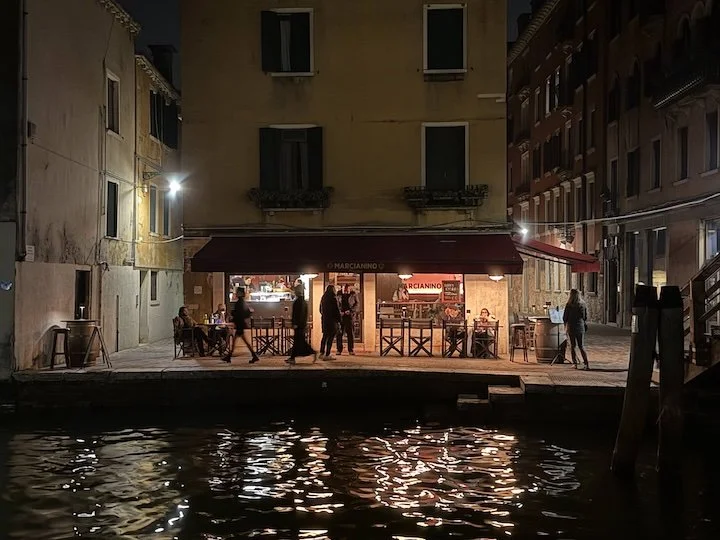
I’m not telling anyone where this is…
Mostly, we felt lucky that we tripped over the Fortuny museum on the way to the Piazza San Marco. May you all have similar good fortune in your global wanderings!